by Jessica Levinson | Apr 18, 2026 | Opinion, Politics
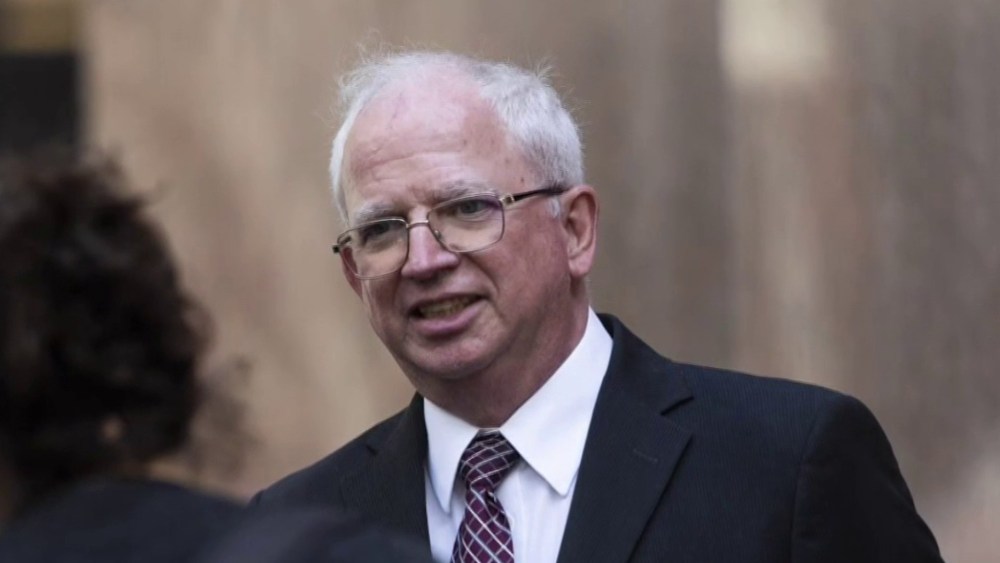
The California Supreme Court on Wednesday ordered the disbarment of John Eastman, a former attorney for President Donald Trump and former dean of Chapman University Fowler School of Law, for his efforts to overturn the 2020 presidential election that Trump lost to Joe Biden.
Eastman was the Trump attorney who wrote out a Jan. 6, 2021, plan for then-Vice President Mike Pence to wrongly reject some of the electoral votes Biden won to keep Trump in the White House.
Contrary to what his supporters have said, Eastman wasn’t disbarred for protected political speech but for sanctionable professional misconduct.
Eastman’s attorney, Randall Miller, said the decision “raises pivotal constitutional concerns.” But his argument is unpersuasive.
He’s not being prohibited from practicing law because of the client he represented, for unpopular political advocacy, aggressive lawyering or espousing a particular ideology or legal view. He was tossed for what California’s State Bar Court Hearing Department deemed “egregious and deceitful conduct.” When Eastman tried to overturn valid election results, he engaged in the type of conduct that threatens not only the integrity of the legal profession, but also the rule of law itself. Indeed, the State Bar of California found that Eastman’s false claims about the presidential election misled the “courts, public officials, and the American public.”
Eastman’s attorney, Randall Miller, said the decision “raises pivotal constitutional concerns” and that Eastman plans to seek the U.S. Supreme Court’s help. But his predictable argument that Eastman’s disbarment raises serious First Amendment concerns is unpersuasive. The First Amendment is not absolute. It does not give lawyers a license to violate professional obligations.
Play
Chief coup plotter John Eastman facing disbarment for effort to lying
by Vice Admiral Robert S. Harward USN (Ret) | Apr 18, 2026 | Opinion, Politics
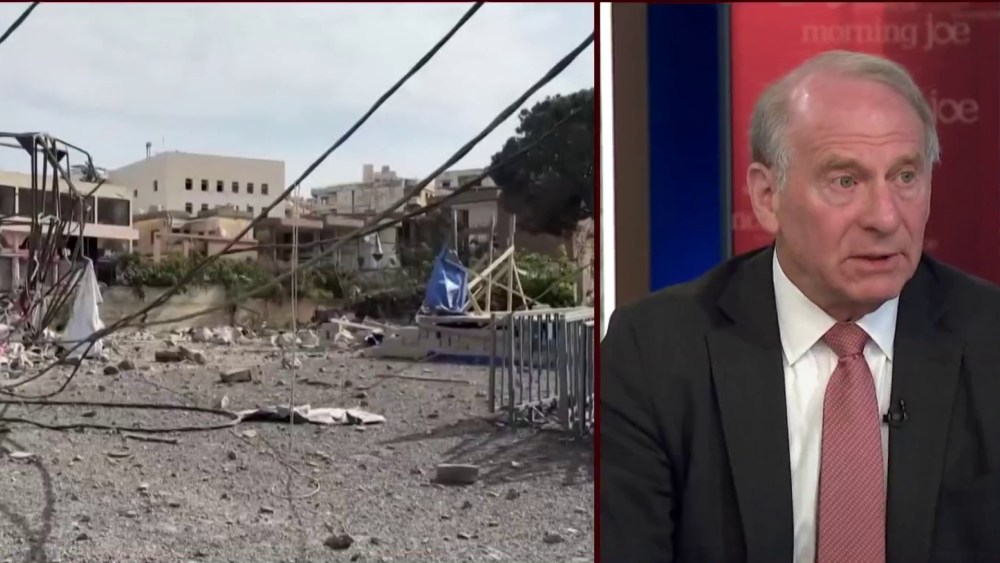
As a former deputy commander of U.S. Central Command, a Navy SEAL and a member of the National Security Council under former President George W. Bush, I spent decades helping oversee U.S. military operations across the Middle East under leaders including Jim Mattis and Lloyd Austin, both of whom later served this nation as Defense secretary. If I were advising President Donald Trump now, my message would be simple: Do not confuse a pause in hostilities with Iran — or even a limited, chaotic “opening” of the Strait of Hormuz — with a durable solution to the hostility between our nations.
The president’s position on Iran has, at times, appeared inconsistent.
The president’s position on Iran has, at times, appeared inconsistent. At times, he has suggested regime change in Iran as an objective. At others, his focus has shifted toward more limited goals, such as preventing a nuclear weapon, reopening the Strait of Hormuz or securing concessions through negotiation. Those are important objectives but they are not, by themselves, a strategy for ending the threat posed by the regime in Tehran. A lasting resolution requires a clearly defined end state.
That kind of clarity has been missing in how the United States has communicated its objectives. Statements suggesting overwhelming or immediate destruction may project strength, but they can also create ambiguity about U.S. intent. Deterrence works best when it’s consistent and tied to clear strategic objectives.
That starts with being clear about the threat. Iran’s leadership has consistently pursued nuclear capability, advanced its missile program, expanded proxy networks across the region and actively supported U.S. adversaries. Those are still their goals, and those
by Duncan Levin | Apr 18, 2026 | Opinion
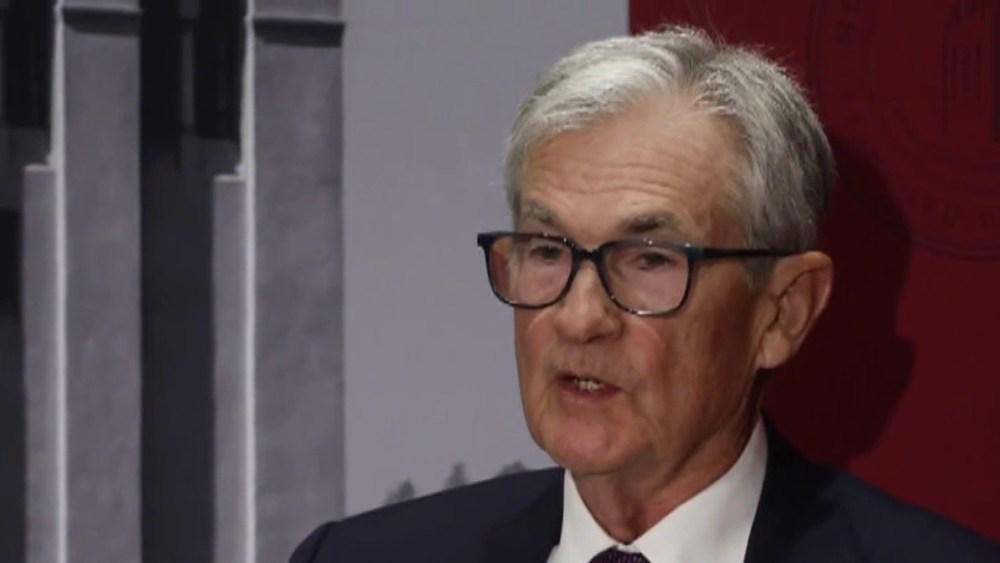
Two things can be true at once: Many American presidents have wanted a more compliant Federal Reserve. And President Donald Trump’s pressure campaign against Fed Chair Jerome Powell has taken tactics to a disturbing level — further eroding the Justice Department’s traditional independence.
The issue is no longer simply Powell, or Trump’s preferences on interest rates or even Fed independence in the abstract. What became unmistakable this week was that a criminal investigation of Powell has been used as a political weapon, abusing prosecutorial powers.
Simply put, prosecutors were never meant to be part of a president’s plan to break the Fed.
Prosecutors were never meant to be part of a president’s plan to break the Fed.
Powell’s term as Fed chair ends on May 15. But he holds a separate tenure on the Federal Reserve Board of Governors that runs through Jan. 31, 2028. So he could remain at the central bank after a successor takes over. In an interview broadcast Wednesday, Trump said, “I’ll have to fire him” if Powell does not step aside from the board when his term ends. Meanwhile, federal prosecutors arrived at a Fed building renovation site without warning.
Those seemingly disparate facts form an ominous truth about how the administration has attempted to force out an independent Fed chair.
Play
Justice Department admits to having no evidence of misconduct by Fed Chair Jerome Powell
March 24, 2026 / 07:07
The world — and global markets — were shocked to learn in January that the DOJ had opened a criminal investigation into Powell purportedly over renovations of historic Fed buildings in Washington. White House officials have alleged that Powell made false statements to
by Andy Craig | Apr 18, 2026 | Opinion
Rep. Jamie Raskin, D-Md., together with 50 Democratic co-sponsors, has reintroduced his bill to create a “Commission on Presidential Capacity” under Section 4 of the 25th Amendment. It is being framed as a response to the crisis of a president who threatened to annihilate an entire civilization, who shares renderings of himself as Jesus Christ while feuding with the pope and who posts snuff videos on social media — to name the highlights from just the past couple of weeks.
In other words, the most powerful man in the world appears to be manifestly insane. It’s not great. But this proposal is misguided on the details, and more importantly, a distraction from what Congress can and should do: impeach Donald Trump and remove him from office.
This is not a new idea from Raskin. He first proposed essentially the same bill in 2017, and again in 2020 during Trump’s bout with Covid. I wrote about it at the time for the Cato Institute, and my objections have not changed. If anything, the current situation makes the flaws in this approach more glaring.
The most powerful man in the world appears to be manifestly insane. It’s not great.
Section 4 of the 25th Amendment allows for the involuntary transfer of presidential power to the vice president. It was designed for genuine incapacity: a president who is comatose, or has been shot, or has gone missing in a plane crash. It was drafted in the shadow of the Kennedy assassination and ratified at the height of the Cold War, when the overriding concern was nuclear command and control. The nightmare scenario was having nobody authorized
by Ja'han Jones | Apr 18, 2026 | Opinion
Online conservative media platforms may see the return of advertising revenue, thanks to a settlement the Trump administration says it reached with three ad agencies this week. The Federal Trade Commission’s settlement, announced Wednesday, continues the Trump administration’s war on free enterprise.
Ars Technica reports:
The Federal Trade Commission pressured three advertising firms into settlements that will likely result in more ad spending on conservative media platforms.
The FTC and eight US states filed a lawsuit against ad firms Dentsu, Publicis, and WPP yesterday, and simultaneously announced settlements with all three companies. The complaint alleges a conspiracy of ‘various interested parties to demonetize disfavored conservative news and opinion sites by denying them digital advertising revenue.’ The FTC filed suit in US District Court for the Northern District of Texas, which happens to be Elon Musk’s preferred judicial venue.
The FTC announcement says the ad firms have agreed to abandon their brand safety agreements and appoint a monitor to ensure compliance. How exactly that compliance will be measured is an open question.
What’s at issue is conservatives’ refusal to allow businesses to spend money as they see fit, as well as MAGA’s public crusade against people and organizations that try to thwart mis- and disinformation. It’s all in furtherance of an Orbán-esque scenario, as media journalist Paul Farhi noted for MS NOW. “Orbán stacked his country’s media regulatory agencies with loyalists and approved new powers to punish and even shutter outlets,” Farhi wrote, and Trump’s FTC is now doing the same.
Back in 2024, hard-right lawmakers such as Jim Jordan alleged that, by signing brand safety agreements to avoid placing ads alongside content deemed harmful or misleading, several advertising
by Daniel R. DePetris | Apr 18, 2026 | Opinion
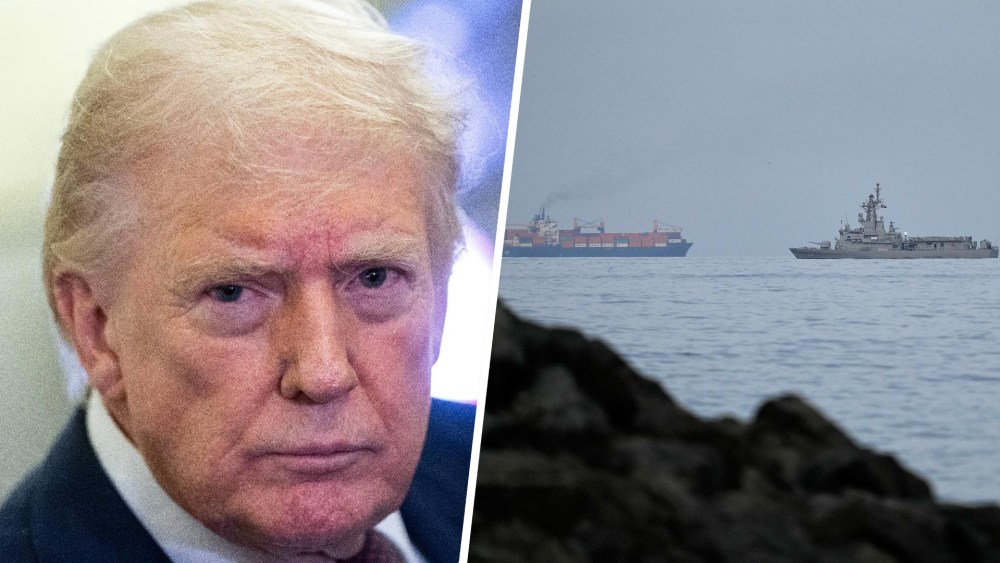
The announcement Friday that the Strait of Hormuz has been reopened has raised big questions: After weeks of airstrikes, missile launches and drone attacks, is the war against Iran close to over? Or is this progress less than meets the eye?
Unfortunately, it may be both. While citizens and markets alike have reason to celebrate Friday’s progress, no one should presume that the fight has permanently ended.
Play
Trump: ‘Iran has agreed to never close the Strait of Hormuz again’
April 17, 2026 / 11:08
Some important context: It was becoming increasingly clear the standoff in the Persian Gulf was untenable to both sides. Iran’s ability to bottle up tanker traffic in the Strait of Hormuz has been its strongest card, resulting in massive price increases around the world on crude oil, gas, fertilizer and even food. The economic strain on ordinary Americans has been clear in President Donald Trump’s poll numbers and in comments from Republican lawmakers expressing concerns about the war’s potential impact on the midterm elections. Iran’s goal was obvious: create such economic and political turmoil for Trump that he had no alternative but to negotiate a settlement on Tehran’s terms.
But Iran’s strategy was not perfect. In retaliation, the Trump administration responded with a blockade of Iranian ports in the Strait of Hormuz, complicating Tehran’s plans. Iranian-linked tankers that would normally be transiting the waterway were prevented by the U.S. Navy from doing so, which meant lost revenue for Tehran’s war budget and the possibility of reduced oil production should the U.S. embargo persist. Both would have squeezed Iran’s ability to maintain its strategy of keeping closed the Middle East’s most important choke point and harassing