by Laura Barrón-López | Apr 27, 2026 | News
President Donald Trump’s immediate response to an armed gunman attempting to breach one of Washington’s most widely attended annual gatherings: Build the White House ballroom.
Two hours after the shooting, Trump, still dressed in his tuxedo and standing alongside multiple members of his Cabinet in the White House press briefing room, said his plans for the 90,000-square-foot ballroom, which is currently tied up in litigation, must move forward.
“It’s drone-proof, it’s bulletproof glass. We need the ballroom,” Trump said. “That’s why [the] Secret Service, that’s why the military are demanding it.”
Presidents have safely attended dinners, fundraisers and prayer breakfasts at the Washington Hilton for six decades, dating back to President Lyndon B. Johnson. Even after being shot while exiting the hotel in 1981, President Ronald Reagan returned to the hotel months later.
But according to Trump, building his ballroom is the panacea for those wanting to do him, or any president, harm.
But according to Trump, building his ballroom is the panacea for those wanting to do him, or any president, harm.
Trump repeatedly claimed in the hours after the shooting — with a preliminary sense that he was a target — that the $400 million ballroom, propped up by largely undisclosed donations, would solve all security problems. And when pressed about the performance of Secret Service, the scourge of political violence, or the suspect’s ability to cross state lines with guns, the administration’s answer remained the same: The ballroom is the fix and nothing else needs to change.
“This event would never have happened with the Militarily Top Secret Ballroom currently under construction at the White House,” Trump posted on Truth Social Sunday morning.
To be
by Carol Leonnig | Apr 27, 2026 | News
An armed teacher’s ability to get within a few dozen yards of a D.C. hotel ballroom where President Donald Trump and top aides had gathered Saturday night has exposed worrisome vulnerabilities in the Secret Service’s protection bubble around the president, current and former law enforcement officials told MS NOW.
Trump and Secret Service Director Sean Curran praised the service for tackling and subduing the armed suspect before he got to the ballroom entrance for the White House Correspondents’ Dinner, calling it a success of the agency’s protective model.
But many other security officials argued that the suspect’s success in dashing past Secret Service agents and officers manning a key security checkpoint — and in getting so close to the ballroom entrance with a shotgun, handgun and knives — made the breach far too close for comfort.
“It’s true the Secret Service protective model worked, but it only worked because of luck,” said former Secret Service agent Bill Gage. “It was just luck he didn’t get into the room and have a chance to open fire.”
It’s true the Secret Service protective model worked, but it only worked because of luck. It was just luck he didn’t get into the room and have a chance to open fire.” Former Secret Service agent Bill Gage
Former and current law enforcement agents told MS NOW they noticed three major areas of concern, some of which reporters at MS NOW personally witnessed while attending the dinner:
A key and final security checkpoint that was critical to protecting the president and senior officials proved porous and weak and failed in multiple ways.
The evacuation of top administration officials suffered delays and challenges
by Andy Campbell | Apr 26, 2026 | News
Within minutes of the shooting at the White House Correspondents’ Dinner on Saturday, a false flag conspiracy theory began to spread on social media.
Users latched onto a quote from White House press secretary Karoline Leavitt during a red carpet interview that aired on Fox News in the hours leading up to the dinner.
“It’ll be funny, it’ll be entertaining, there will be some shots fired tonight,” she said with a grin. “Everyone should tune in, it’s going to be really great.”
The “shots fired” line was very clearly a reference to the upcoming speeches at the dinner, which serves as an annual venue for prominent comedians, journalists and presidents to roast each other on stage. This was Donald Trump’s first appearance as president, and given his well-documented distaste for the media, he was almost certain to trade some rhetorical salvos with his audience.
Instead, real shots were fired outside the underground ballroom at the Washington Hilton hotel, where hundreds of people were seated before the president.
By Sunday afternoon, investigators and White House officials — including the president himself — had already released a trove of information, including the suspect’s name and photos. They also divulged clues to his alleged motive and targets — which may have included Trump and administration officials. But in the immediate aftermath of the shooting, when no tangible evidence was available, the conspiracists of the internet turned their attention to the Leavitt quote.
“False flag confirmed,” wrote user @ProudSocialist on X, an account with nearly half a million followers.
The baseless false flag claim — that the shooting was orchestrated to somehow benefit the Trump administration — spread quickly across social
by Erum Salam | Apr 26, 2026 | News
Trump administration officials — “likely including the president” — were the apparent targets of the shooting at the annual White House correspondents’ dinner, acting Attorney General Todd Blanche said Sunday.
In an interview with NBC’s “Meet the Press” the morning after President Donald Trump was rushed off stage by Secret Service agents as guests ducked under dining tables while shots rang out at the White House Correspondents’ Association Dinner, Blanche said of the gunman: “We believe that he was targeting administration officials.”
Blanche cautioned that the belief is “quite preliminary” as law-enforcement officials sift through evidence. The acting attorney general said investigators had recovered the suspect’s “electronic devices” and that “there were some writings, and we’ve already spoken with several witnesses who knew him.”
He did not elaborate on the writings. But theNew York Post obtained what it called a 1,052-word missive from the gunman, reportedly sent to his family members moments before he carried out the foiled attack, in which he said he intended to target administration officials.
The suspect referred to himself as the “Friendly Federal Assassin” in the letter.
Blanche said investigators believe that the suspect, which a former senior law enforcement official identified to MS NOW as 31-year old California resident Cole Tomas Allen, acted alone. He said Allen traveled by train from Los Angeles to Chicago and then from Chicago to Washington. The suspect had two firearms on him that were purchased legally in past couple of years, Blanche said.
The armed suspect was tackled near a security checkpoint at the Washington Hilton hotel, where the event has been held annually for decades, before he could enter the ballroom. He was
by Aimee Gabay | Apr 26, 2026 | AI, data centers, Indigenous, Indigenous Land, News
Artificial intelligence, or AI, is helping Indigenous communities detect illegal logging, track wildfires, and monitoring of traditional lands. But the data centers powering AI are driving new threats, requiring water, energy, and critical minerals often extracted from Indigenous territories. Now, Indigenous leaders at the United Nations Permanent Forum on Indigenous Issues, or UNPFII…
Source

by Maya Eaglin | Apr 26, 2026 | News
The walls are closing in on millions of Americans who utilize federal healthcare benefits such as Medicare and Medicaid, as the sweeping changes and cuts promised in President Donald Trump’s “big, beautiful bill” inch closer to reality, and lawmakers do little to soften the incoming blow.
All eyes were on Health and Human Services Secretary Robert F. Kennedy Jr. last week as he wrapped up a marathon seven congressional committee hearings, in review of several proposed federal health nominees and his handling of HHS. Senators spent the week grilling Kennedy over Trump’s 2027 budget proposal, which would cut $15.8 billion from HHS and put new restrictions on those seeking Medicaid coverage — on top of the impacts of Trump’s bill, which leaves millions at risk of losing insurance coverage.
But the Kennedy hearings didn’t offer much in the way of positive news for federal aid recipients anxious about the future. Instead, Kennedy spent the week defending Trump’s budget proposal and balking — or making misleading claims — about cuts to Medicaid, which is poised to lose $1 trillion in federal spending by 2034 under Trump’s current terms.
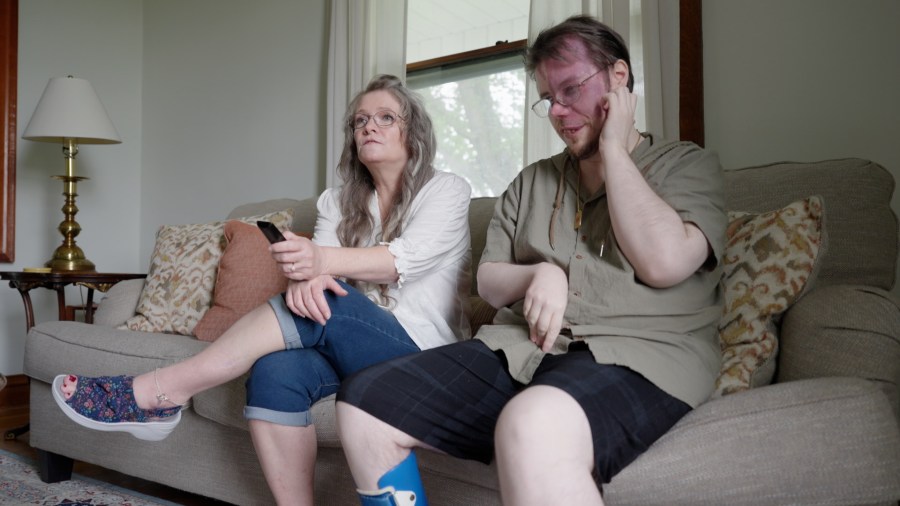
“In all honesty, until Trump is gone, RFK is out, along with others who shouldn’t be anywhere near anything to do with Healthcare, we are screwed,” said Edwina Billhimer, a Medicaid recipient and registered Republican who lives in southern Indiana.
Edwina and Dennis Billhimer at their home in Indiana. Ale Basalo and Konner Barrick / MS NOW
Billhimer suffers from Ehlers-Danlos Syndrome, a genetic connective tissue disorder that causes joint issues, chronic pain and severe fatigue. Billhimer cannot physically work and takes medicine around the clock to manage