by Steve Benen | Apr 30, 2026 | Maddowblog, News, Politics
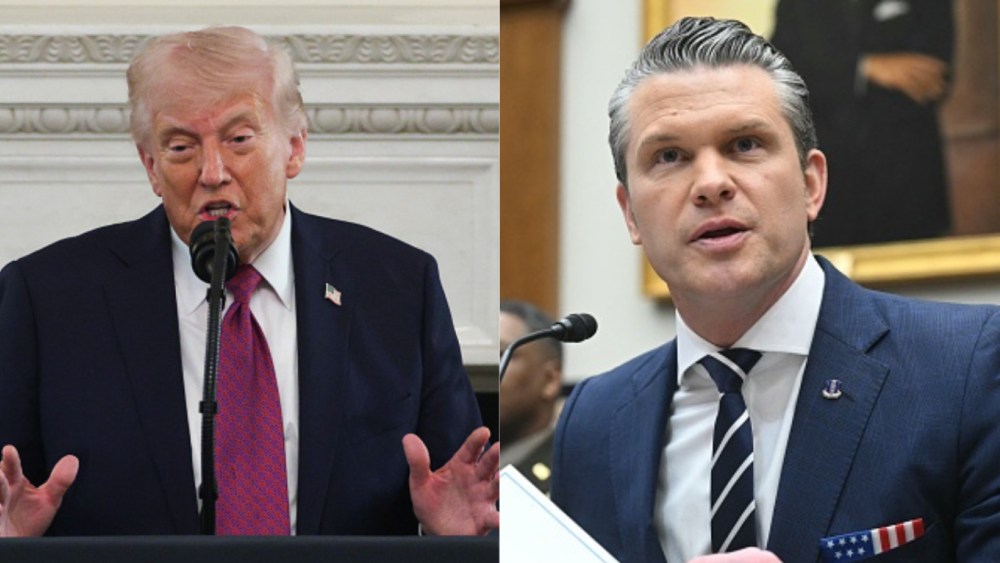
The list of controversies surrounding Defense Secretary Pete Hegseth is not short, but near the top is the unusually aggressive purge campaign he’s led at the Pentagon that’s seen a staggering number of U.S. military leaders fired since he took the reins early last year.
Last week, for example, the former Fox News host ousted Navy Secretary John Phelan, which came on the heels of Hegseth also firing Gen. Randy George, the Army’s top officer. Those developments followed the secretary forcing out Col. Dave Butler, which came after he parted ways with three-star Lt. Gen. Joe McGee, which came just two weeks after the public learned about Adm. Alvin Holsey resigning as head of the U.S. Southern Command, reportedly at Hegseth’s request.
This is just a small part of a much longer list, and even some congressional Republicans have mustered the courage to express concern.
During Hegseth’s appearance Wednesday before the House Armed Services Committee, some GOP members made clear that they thought the secretary had simply gone too far. Rep. Don Bacon of Nebraska, for example, said, “I share a bipartisan concern of the firings that we’ve seen at the Pentagon. … I would just point out it may be constitutionally right — you have the constitutional right to do these things — but it doesn’t make it right or wise.”
Other Republicans, including Rep. Austin Scott of Georgia, raised related concerns.
For his part, the beleaguered secretary had a specific defense, which he appeared to have prepared in advance. “Under Barack Obama, 197 general officers were removed,” Hegseth testified. “So this is not something specific to this administration.”
At first blush, that might seem
by Ali Vitali | Apr 30, 2026 | News
WASHINGTON — Mike Pence is not running for anything. He’s doing something he thinks is more important.
The former vice president is quietly building what he hopes will become the institutional backbone of a post-Trump Republican Party — a think tank expanding fast enough to need a second floor, a growing roster of conservative policy hands fleeing an ideologically adrift Heritage Foundation and a pointed argument that the GOP has lost its way on everything from tariffs to abortion to Ukraine.
“When I look at 2028, I think it’s going to be more important to focus on what we’re for before we focus on who we’re for,” Pence told MS NOW in a wide-ranging interview, a jab at his successor, JD Vance, and a signal that he considers the 2028 succession line anything but settled.
What he’s for, Pence made clear, is a return to the conservatism he believes the party has abandoned.
“I really do believe, not only, not only are these conservative principles a pathway for success for the Republican Party,” Pence said. “Over the last 50 years, they’ve resulted in a more prosperous, more secure America. I think that that’s where our movement needs to return and to revive — and, in many ways, rediscover — the conservative principles that first came to national prominence with Ronald Reagan’s election in 1980.”
Pence detailed the ways his party has strayed from those ideals lately — both at home and abroad.
President Donald Trump’s signature tariffs are “a profound departure” from core conservative principles that has left the economy “struggling,” he said. The isolationist strain winding its way through mainstream GOP foreign policy concerns him; he

by Fallon Gallagher | Apr 30, 2026 | News
A federal judge in Washington heard arguments this week about whether the president can change the name of the famed Kennedy Center for the Performing Arts — to add his own — and close it for two years of renovation.
On Wednesday morning, a federal judge considered a challenge brought by a coalition of eight preservation groups, including the group that brought a lawsuit over construction of the White House ballroom. The groups allege that the president — who ousted the center’s board of trustees to install loyalists and then declared himself chairman — has flouted environmental and historic preservation laws in closing the center for renovation.
The hearing was one in a pair of lawsuits challenging the president’s proposed remaking of the Kennedy Center, Washington’s premier performing arts space, named for President John F. Kennedy. Trump moved late last year to rename the building the Donald J. Trump and John F. Kennedy Memorial Center for the Performing Arts, spurring a lawsuit filed in December by Rep. Joyce Beatty, D-Ohio, who called the renaming “a flagrant violation of the rule of law,” as it requires an act of Congress. The same judge heard arguments in that case Tuesday morning.
“They are embezzling the center’s goodwill and its good name,” Nathaniel Zelinsky, a lawyer for Beatty, argued in court. “The center is named for John F. Kennedy and John F. Kennedy alone.”
In a post on Truth Social, Trump described the project as “Construction, Revitalization, and Complete Rebuilding” to create a “new and beautiful Landmark.” The president’s comments suggest his vision of the project exceeds the routine repairs and maintenance already authorized by Congress.
The Kennedy Center
by Kevin Frey | Apr 30, 2026 | News
A day after their House colleagues had a chance to put Defense Secretary Pete Hegseth on the record about the U.S. war with Iran, senators will now get their turn.
Democrats on the Senate Armed Services Committee will question Hegseth on Thursday, and they plan to pick up where their House colleagues left off — and where some of them were unable to get answers.
One area where Democratic senators want to drill down is the cost of the conflict. On Wednesday, the Pentagon’s comptroller told House lawmakers that the now two-month-old conflict has so far cost $25 billion — a figure Hegseth restated repeatedly.
Play
‘Warmonger’ Trump hit with backlash over $25 billion war: Hegseth grilled, faces calls to resign
April 29, 2026 / 08:34
But members of the Senate’s Democratic Caucus aren’t convinced that’s the total cost.
“I think that’s way low,” Sen. Angus King, I-Maine, said.
“I think that’s probably an undercounting,” Sen. Tammy Duckworth, D-Ill., told MS NOW.
And Sen. Richard Blumenthal, D-Conn., said $25 billion is likely “low-balling it.”
“The estimates I’ve heard are at least a billion dollars a day,” Blumenthal said. “He is deluding himself if he believes that figure — and possibly deceiving the American people.”
Senate Democrats largely declined to show their cards when asked how they plan to approach Thursday’s hearing, but they suggested they’ll hit on many similar themes as their House colleagues — including pressing Hegseth to clarify why the American people are better off now than they were before the Iran war began.
House Democrats pursued this line of questioning Wednesday, with Rep. Ro Khanna, D-Calif, asking about rising gas and food prices and what the war will mean for American consumers in the longterm.
by The Associated Press | Apr 30, 2026 | News
WASHINGTON (AP) — A group of cultural and historic preservation organizations pressed a federal judge Wednesday to block President Donald Trump from making major renovations to the Kennedy Center, the art and cultural venue that has seen rapid transformation since the president returned to office last year.
The groups want U.S. District Judge Christopher Cooper to issue a preliminary injunction that would halt any construction ahead of the July 6 start date, saying they worry the president and board of trustees will flout historic preservation rules that seek to maintain the building, which draws millions of visitors every year.
The laws that govern the process “go to the very fundamental question of: Do we slow down and take stock before we make changes to properties that define the American experience?” attorney Greg Werkheiser said in an interview after the hearing.
Justice Department attorneys, representing the president and board, argued Wednesday that plans for the building are limited in scope and well within the authority of the board, not requiring extra approvals.
Since returning to office last year, Trump has taken particular interest in the Kennedy Center. He ousted its previous leadership and replaced it with a handpicked board that named him chairman, changes that prompted an outcry from many artists and exacerbated the operation’s financial challenges. Trump, whose name was later added to the building’s facade, announced the renovations earlier this year.
Besides being a premier arts and cultural destination, the Kennedy Center is considered a “living monument” to President John F. Kennedy, who raised millions to build the center but was assassinated before it opened. Perched on the Potomac River, the massive structure and gleaming white
by The Associated Press | Apr 30, 2026 | News
WASHINGTON (AP) — The Republican-controlled House approved a three-year reauthorization of a divisive U.S. surveillance program ahead of its expiration on Friday, adding new oversight measures but stopping short of the warrant requirement that critics have demanded.
A large group of Democrats joined most Republicans in passing the bill by a 235-191 vote. The law’s renewal still faces an uncertain path to passage, with a sign-off needed from the Senate and President Donald Trump.
While the Senate could eventually be amenable to oversight measures added by the House, Senate Majority Leader John Thune said late Wednesday that another short-term extension will likely be needed ahead of the Friday deadline. House leaders added separate legislation banning a central bank digital currency to win more votes, and Thune said that part of the bill is “dead on arrival” in the Senate.
Still, the passage in the House was a breakthrough for Republican leaders after Speaker Mike Johnson earlier in the day secured the support of several Republican holdouts to advance the bill to a final vote. The chamber had been unable to pass a long-term extension since Republican leaders earlier this month staged a hectic late-night effort to extend the surveillance program, only to see multiple bills fail on the floor.
“Two-thirds of the president’s daily national security briefing comes from intelligence collected by that statute,” Johnson said about the program. “We cannot allow it to go dark.”
Warrants remain central to the fight
The debate centers on a provision of the Foreign Intelligence Surveillance Act, or FISA, that allows the CIA, National Security Agency, FBI and other agencies to collect and analyze communications from foreign targets without