by Ja'han Jones | Aug 5, 2026 | Congress, elections, Opinion, White House
It’s official: Michigan’s Amir Hassan has notched the most humiliating loss for MAGA world during this primary election cycle.
Hassan, a Black man who received a late endorsement from Donald Trump and who formerly served on Transportation Secretary Sean Duffy’s security detail, was vying for a seat representing Michigan’s battleground 8th Congressional District — one that could prove crucial in deciding control of the House of Representatives this fall.
But he just got shellacked by Thomas Smith, a nondescript white dude who suspended his campaign weeks ago, citing a lack of funds after complaining he couldn’t reach the help desk at the Federal Election Commission. Smith’s name remained on the ballot — he is the official nominee now — but still, this situation is like losing a foot race to a dead man. Harsh lessons abound for MAGA world, it seems, as the president’s endorsement proves worthless in this case.
As the Michigan Advance explained, the district was “one of 13 congressional districts nationwide that voted for Trump in 2024 while simultaneously electing a Democrat to the House of Representatives.”
On one hand, it’s fair to wonder if Republican primary voters in the district might not have been thrilled about the prospect of nominating a Black man named Amir Hassan who has claimed to be Muslim and Christian during the same campaign — whether endorsed by Trump or not. Judging from some of the memes mocking the results, it’s clear many people suspect MAGA bigotry played a key role, which Trump ally Laura Loomer basically confirmed in this Islamophobic tweet.
But the robotic Hassan was also an objectively bad candidate, and his failed campaign offers
by Steve Benen | Aug 5, 2026 | 2026 election, elections, Maddowblog, Politics
This week’s primary elections in five states generated all kinds of attention, and for good reason. There were important and captivating contests up and down the ballot in Kansas, Michigan, Missouri, Virginia and Washington.
But as the dust settles on one of the most closely watched primary days of the year, it’s important not to overlook voters’ choices on several statewide ballot measures, which were every bit as interesting. Three of them stood out for me.
First, in ruby-red Missouri, Republican officials have grown deeply frustrated in recent years by citizen-initiated ballot measures that advanced a series of progressive policy goals, including expanding Medicaid, raising the minimum wage, protecting abortion rights and legalizing marijuana.
In response, GOP policymakers in Missouri this year championed Amendment 4, which was designed to make it harder for voters to circumvent the Republican-led legislature.
How did that work out? Not well. With just about all of the votes counted in Missouri, Amendment 4 lost by a lopsided margin: 80% of the state’s voters opposed the proposal, while only 20% supported it.
Missouri Republicans also backed Amendment 5 this year, which would have eliminated state income taxes. This proposal fared even worse: 83% of the state’s voters opposed the change, while 17% supported it.
Meanwhile, in Kansas, Republicans championed Amendment 1, a proposed constitutional amendment to change how state Supreme Court justices are chosen, in the hope that it would ultimately lead to new restrictions on abortion rights.
This failed too. The New York Times reported:
Kansas voters on Tuesday rejected a ballot measure that would have required state Supreme Court justices to be popularly elected rather than appointed by the governor, dealing another
by Hunter Woodall | Aug 5, 2026 | elections, News Analysis
Abdul El-Sayed was vastly outspent. He didn’t have the backing of the Senate’s top Democrat and has lost in a statewide primary before. He ran a starkly progressive campaign in a state Donald Trump won narrowly two years ago.
In short, by the party’s own traditional measure of electability he had no business winning.
While votes are still being counted in the race and margins remain thin, El-Sayed entered Wednesday as Michigan’s likely Senate Democratic nominee after a contentious primary with Rep. Haley Stevens.
Progressives like El-Sayed, in the Bernie Sanders mold, have angled for more influence in a party struggling to meet the moment. That’s an easy case to make in the bluest parts of the country.
It’s far harder in a state as politically divided as Michigan. With Sen. Gary Peters retiring, this is a seat Democrats have to hold in order to maintain a reasonable chance to flip control of the Senate this November. Trump won Michigan in 2024 by around 80,000 votes. No Republican has won a Senate race here in 30 years, but the margins have been close enough that no one in either party can treat the seat as safe.
El-Sayed is now on track to face Republican Mike Rogers in November. Rogers, a former mid-Michigan congressman, was also the GOP’s standard-bearer in the 2024 Senate race, when he lost to Democrat Elissa Slotkin by about 20,000 votes. But he may represent conservatives’ best opportunity to flip a Democratic-held Senate seat, given a tough midterm environment for Trump’s party.
An MS NOW analysis of federal campaign finance records found that at least $59 million was spent by super PACs and other

by Paul Waldman | Aug 5, 2026 | Congress, elections, Opinion
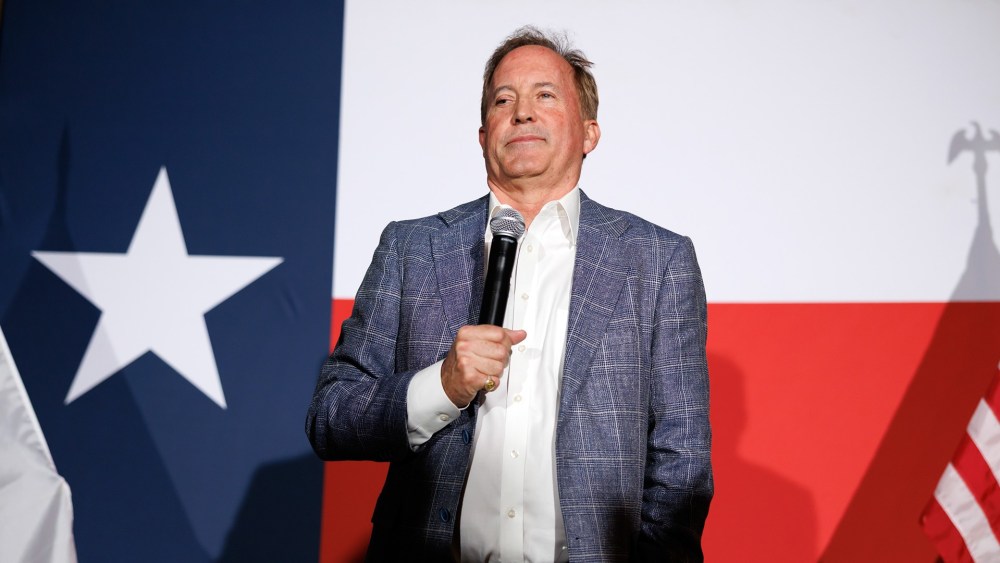
President Trump may believe that “affordability” is a word “made up by the Democrats” to undermine him. But in Texas, a state Trump won by 14 percentage points less than two years ago, one of the most loyal MAGA candidates is abandoning the culture war and hopping on the affordability bandwagon.
Texas Attorney General Ken Paxton, after ousting incumbent Sen. John Cornyn in the Republican primary, is in a tight race with state Sen. James Talarico. At first, Paxton and his allies focused on defining his opponent as “low-T Talarico” — a radical left-wing ideologue bent on sapping the testosterone from manly Texas men. But last week Paxton changed tunes, introducing an economic plan with new and expanded tax breaks for things like health care, child care and housing. The accompanying ad sounds the same notes you’ll hear from most of the Democrats running for office in this election. “Washington is making it harder than ever to get ahead,” he says in the ad. “And the American Dream is slipping away as the cost of everything from housing to health care rises.”
Wait — doesn’t Trump say we’re living in a “golden age” of boundless prosperity?
In one way, what we’re seeing from Paxton is a familiar pivot from the primary campaign to the general election. But this is unfamiliar ground for him.
What could be more of an insult to the president to whom Paxton has devoted himself than to say that even with Trump in the Oval Office delivering his glorious economic stewardship to a grateful populace — not to mention Republicans controlling both houses of Congress and every lever of power in
by Stephanie Ruhle | Aug 5, 2026 | Business, elections, Opinion
This election is about the economy.
The rise of the Democratic Socialists of America, or DSA, is about the economy.
President Donald Trump losing support because he was not honest with his base is not about integrity — it’s about the economy.
According to the latest CNBC All-America survey, 61% of Americans are pessimistic about the economy and where it is going. That is not a partisan read, it’s everyday Americans’ economic assessment. People feel they cannot get a leg up, and while there is much blame to place on Trump, frustration with the entire system is apparent in these primaries.
Play
‘Medicare for All’ being put to the test in Michigan Dem Senate primary
August 4, 2026 / 08:04
This election is also taking a close look at the definition of power — which is most often equated to money. In terms of campaign war chests, Republicans have the biggest one, and it is only growing.
The richest among us have grown significantly richer, while millions of Americans are struggling to support themselves. That divide and anger is growing — resulting in more big-dollar donations being funneled to Republican candidates. The Trump administration’s biggest wins have been regulatory relief, tax cuts and, of course, a stock market that keeps climbing. All of it is good for the C-suite and the investor class, and campaign dollars want to keep that party going.
However, Trump’s tanking poll numbers, along with the rise in anti-establishment candidates on the left, have everyone looking at a possible massive shift in power. These outlier candidates do not appeal to voters because of radical positions like “defund the police.” Rather, their draw comes from speaking
by Peter Alexander | Aug 4, 2026 | 2026 election, elections, News
Michigan’s Saginaw County has a record of picking political winners — accurately selecting each of the last five presidents. On Tuesday, voters here are participating in a primary that captures a choice their party is wrestling with nationwide. With a seat crucial to its chances of earning a Senate majority this fall, do democrats nominate the candidate party leaders considered the most electable, or the one the progressive base prefers?
Rep. Haley Stevens is the pick of most party leaders, who see her as a moderate, swing-district winner built for a general election. Abdul El-Sayed is the choice of the left, running on Medicare for All and reducing the influence of money in politics. Tuesday’s winner will face Republican Rep. Mike Rogers, who lost the 2024 Senate race to Elissa Slotkin by fewer than 20,000 votes out of 5.5 million cast statewide; in Saginaw County, that race ended in a near tie, even as President Donald Trump won.
For some voters, a margin that thin makes electability the only question that counts. Norman Braddock, a former city councilman of Saginaw who identifies as an independent, cast an absentee ballot for Stevens.
“I’m worried that El-Sayed can’t beat Mike Rogers,” he said. “That’s my main concern.”
For Braddock, the primary “is more about November than it is about August.” His advice to undecided Democrats was blunt.
“Choose the strongest candidate,” he said. “Even though the Democrats have a lot of momentum, you still have to choose the person, ‘cause Mike Rogers is no joke.’”
Daniel Rozel, a Republican who voted early for Rogers, sees it the same way. Asked which Democrat would be harder for his party