by Jordan Rubin | Jun 12, 2026 | Deadline: Legal Blog
“In a recent column, you wrote that one of Donald Trump’s personal lawyers had written to the Supreme Court justices ‘to suggest that they “may wish to consider the petitions together” once the upcoming one is filed’ in the E. Jean Carroll appeal. How is that legal? Does the Supreme Court entertain these sorts of communications?” — LG
Hi LG,
It is common practice for lawyers to alert courts to relevant developments in their cases. Supreme Court practice is no exception.
While it’s perfectly legal to write such letters, the degree to which the justices “entertain” them can be hard to pinpoint. They aren’t formal motions that the court either grants or denies. Rather, they aim to bolster the positions that the lawyers were already pressing. Therefore, it can be tough to isolate a letter’s effect, if any, in the context of the broader case in which it appears. The recent letter in Trump v. Carroll is a good example of that, for reasons I’ll explain below.
First, some background to help understand the letter’s significance (and potential insignificance) in the context of this complex litigation.
There are two separate but related civil cases that Carroll brought against Trump. They both stem from her claim that he assaulted her in a department store dressing room decades ago and defamed her about it in 2019 and 2022.
In one of the cases, a jury in 2023 awarded her $5 million in damages after finding Trump liable for sexual abuse and for defamation over his 2022 statements. In the other, a jury in 2024 awarded her $83.3 million in defamation damages over his 2019 statements.
The $5
by Jordan Rubin | Jun 12, 2026 | Deadline: Legal Blog
The Supreme Court rejected Alabama’s attempt to execute Jeffery Lee with nitrogen gas after lower courts stopped the state from executing him with that method.
Justices Clarence Thomas, Samuel Alito and Neil Gorsuch voted to side with the state, according to the court’s unexplained order on Thursday night denying the state’s emergency application.
On Tuesday, a Trump-appointed judge in Alabama blocked the state from executing Lee under its nitrogen-hypoxia protocol. U.S. District Judge Emily Marks found that Lee proved the state’s method violates the Eighth Amendment’s ban on cruel and unusual punishment.
She emphasized that although she was issuing a permanent injunction against the nitrogen method, she wasn’t banning the state from executing Lee. She said the record showed his alternative proposal of the firing squad “significantly reduces a substantial risk of severe pain as compared to nitrogen-hypoxia.”
Under precedent adopted by the Supreme Court’s GOP-appointed majority, an inmate who challenges an execution method as unconstitutional must propose an alternative method that is feasible, readily implemented and significantly reduces a substantial risk of severe pain.
Having scheduled Lee’s execution for Thursday, Alabama officials moved to lift Marks’ injunction in an effort to proceed as planned. Procedurally, they first had to ask Marks herself for relief. In their motion to the judge, they said she downplayed the risks of the firing squad, as well as the state’s concern about finding willing and able executioners for the shooting method.
State officials further said the fact that they scheduled Lee’s execution for Thursday “should have sunk his claim.” They said that “however easy or hard it would be to implement a firing squad in the abstract, there’s no support

by Jordan Rubin | Jun 10, 2026 | Deadline: Legal Blog
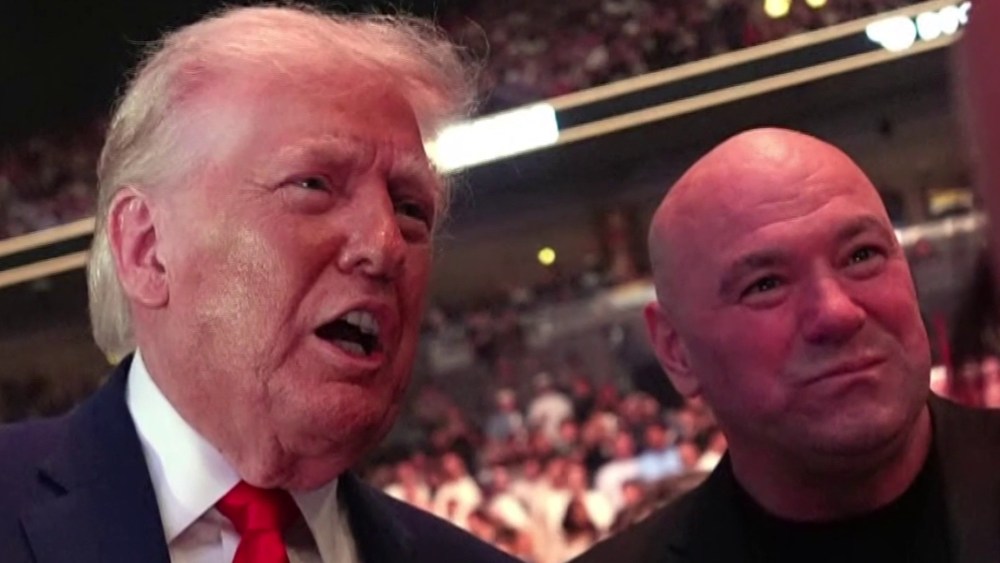
In response to a lawsuit seeking to halt what plaintiffs called a “deeply corrupt” plan to hold UFC cage fights at the White House this weekend, the Trump administration pointed to events hosted under prior administrations.
“No one raised a cavil at the Biden ice-rink or Elton John stage,” the government said in its opposition filing.
It said that during Joe Biden’s presidency, the White House “erected a 48 foot by 68 foot ice-skating rink on the South Lawn, complete with a 100-ton air cooled refrigeration system and pump, lighting system, and sound system,” for an event that the filing said was “supported by the National Hockey League and Comcast.”
In response to criticism of what the new lawsuit called the Trump administration’s “unlawful” building of the “92-foot-tall, 600-ton steel structure it calls ‘the Claw,’” the administration said the White House had previously “erected substantial temporary structures when hosting concerts,” citing a 2022 Elton John performance on the South Lawn.
It added that President Barack Obama “regularly put on exhibitions at the White House in partnership with private entities, including the South by South Lawn event; the concert entitled BET Presents: Love and Happiness: An Obama Celebration; as well as a Beyonce concert.”
The administration argued that “the historic precedent of Presidents erecting temporary fortifications … and Congress acquiescing to those activities” bolsters the legality of this weekend’s planned festivities.
The suit’s success doesn’t fully hinge on whether Judge Amit Mehta, the Obama appointee who is overseeing this emergency litigation in Washington, D.C., finds the historical comparisons compelling. That’s because the administration has raised several legal grounds on which Mehta can reject the suit, and
by Jordan Rubin | Jun 9, 2026 | Deadline: Legal Blog
President Donald Trump will have another case coming to the Supreme Court from his personal docket. This one relates to the defamation lawsuit he filed against CNN over the network’s use of the phrase “big lie” regarding his claims about the 2020 election, which he lost to Joe Biden.
In March, the Atlanta-based U.S. Court of Appeals for the 11th Circuit declined to consider his case, after a three-judge panel of the appeals court upheld a district judge’s ruling against him. Two of the three judges from the unanimous panel ruling were Trump appointees, as was the district judge who dismissed Trump’s suit in 2023. The judge did so on the grounds that the statements at issue were opinion, not factually false statements, and that Trump hadn’t shown that CNN acted with “actual malice.”
Trump argued that CNN’s use of the “big lie” phrase was intended to associate him with Adolf Hitler and Nazi propaganda. But the appellate panel deemed his claim “unpersuasive,” calling his assumption that the term is clear enough to be a factual statement “untenable.” It called his other claims “meritless.”
The March denial from the full appeals court put the president on the clock to petition the justices if he wanted a chance at saving the case. A filing this month to the high court confirms that he will be petitioning the justices, but not quite yet. The filing said his petition is due June 15 but he wants an extension to Aug. 14. Such extensions are routinely requested and granted. The request was made specifically to Justice Clarence Thomas, which is also routine because Thomas is the justice assigned to field administrative requests like this from the 11th
by Jordan Rubin | Jun 6, 2026 | Deadline: Legal Blog
Welcome back, Deadline: Legal Newsletter readers. Apparently, June is “gamesmanship” month at the Supreme Court. Last year, Justice Sonia Sotomayor accused the GOP-appointed majority of rewarding the Trump administration’s “gamesmanship” in the birthright citizenship litigation. This week, she accused the majority of rewarding Alabama’s “gamesmanship” in redistricting litigation.
Last year’s claim stemmed from how the administration handled challenges to President Donald Trump’s executive order, which aimed to end the guarantee of automatic citizenship for babies born in this country. Judges easily issued nationwide injunctions against the order due to how obviously illegal it was. “Blatantly unconstitutional” is what one judge called it.
Yet the administration didn’t run to the justices for a quick ruling on the order’s legality, as it has done for a variety of other Trump policies blocked in lower courts. Instead, it used the citizenship litigation as a vehicle to seek stricter standards for nationwide injunctions generally, which would make it harder for plaintiffs to challenge all sorts of executive policies going forward. The administration stressed that it only wanted the procedural ruling; it didn’t want a ruling on the merits of Trump’s citizenship order.
The majority obliged in last June’s Trump v. CASA decision, without ruling on the merits of Trump’s citizenship order one way or the other. In her dissent for the three Democratic appointees, Sotomayor observed that the administration wasn’t shy about asking for speedy merits rulings in other cases and yet it didn’t want one in the CASA case. She said the reason why was “obvious,” because winning on the citizenship issue would be an “impossible task” due to the order’s plain flaws.
“So the Government instead
by Jordan Rubin | Jun 3, 2026 | Deadline: Legal Blog
The Supreme Court’s Republican-appointed majority granted Alabama’s emergency request to use a congressional map that a lower court deemed racially discriminatory even after the high court made voting rights claims harder to prove in Louisiana v. Callais.
In an opinion Tuesday night that is poised to help the GOP in the midterms and beyond, the high court majority said the lower court failed to abide by Callais and failed to give state legislators the benefit of the doubt that they weren’t engaged in intentional discrimination.
In a dissent for the three Democratic appointees, Justice Sonia Sotomayor wrote that the majority “disregards both democratic values and the rule of law.”
She said the majority chose a path that will cause “a chaotic election” with a “never-before-used congressional map that intentionally discriminates against Black Alabamians, that Alabama adopted in unashamed defiance of a prior court order directly affirmed by this Court, and that will require officials to change the voter registrations of hundreds of thousands of voters in just days at best, a task that Alabama previously represented would take months.”
Play
Activist on GOP redistricting after SCOTUS voting rights ruling: ‘Rampant racial discrimination’
May 16, 2026 / 05:28
After its April ruling in Callais, the Supreme Court’s GOP-appointed majority ordered the lower court panel in Alabama to review its prior ruling against the state in light of Callais.
On further review, the three-judge panel, which had two Trump-appointed judges on it, still ruled against the state. The panel noted it had previously made a separate finding of intentional discrimination against Black voters, which the Callais ruling didn’t disturb. Plus, the panel said Black voters could separately satisfy the high