by Max Burns | Aug 7, 2026 | Congress, elections, Opinion
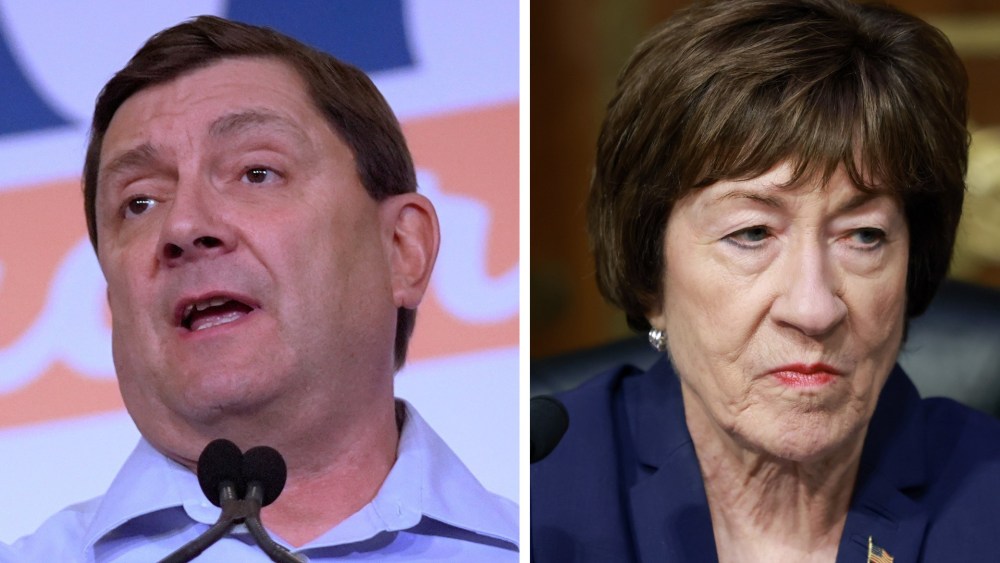
After weeks of silence, Maine Sen. Susan Collins finally announced Wednesday that she would oppose Todd Blanche’s nomination as the next attorney general. In a statement posted on X, Collins lambasted the acting attorney general for presiding over “actions that have further eroded the [Justice] Department’s independence.”
Collins specifically took issue with Blanche’s approval of a sweetheart deal between President Donald Trump and the IRS that “shield[ed] the President, his sons and the family business from IRS audits,” as well as Blanche’s recent call with religious leaders, in which he promised to expand Republicans’ war on abortion rights.
Collins has either ignored or actively blocked attempt after attempt by Democrats to restore trust and independence at the DOJ.
Collins’ objections all sound correct in isolation, but her admission that the Department of Justice has become a partisan weapon in Trump’s pocket raises a host of tough questions she cannot answer. Most pointedly, if Collins really believes what she’s saying, why is she only speaking up now? And why has she fought against Democratic efforts to bring accountability and independence back to the DOJ?
To understand Collins’ attempt to brand herself as an anti-Blanche warrior for public integrity, look no further than the latest Maine Senate polling. A recent University of New Hampshire poll found Collins trailing her Democratic challenger Troy Jackson 49-46, with a majority of voters disapproving of Collins’ job performance. Despite positioning herself as a check on Trump’s corruption, public voting data reveals she supported the MAGA agenda nearly 95% of the time. No wonder Trump endorsed Collins last month.
Collins’ opposition to Blanche’s confirmation offers her the chance to look like she’s
by Zeeshan Aleem | Aug 7, 2026 | Congress, elections, Opinion
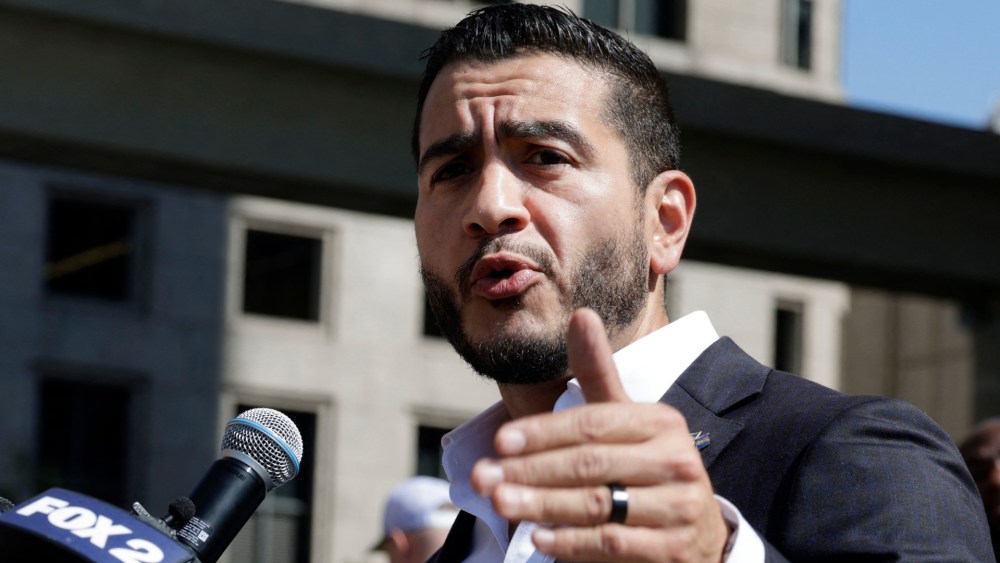
Republicans swiftly rolled out attack ads against Abdul El-Sayed after the Democrat won Tuesday’s U.S. Senate primary election in Michigan. And those attack ads are racist as hell.
An ad released by the National Republican Senatorial Committee opens with an ominous-sounding soundtrack and calls El-Sayed, a former Wayne County health director, by the unshortened version of his first name and includes his middle name — “Abdulrahman Mohamed El-Sayed.” Notably, the politician uses neither “Abdulrahman” nor his middle name in his public life, and the NRSC did not refer to him that way in its press releases before he won the primary. In the way that President Donald Trump uses “Barack Hussein Obama” to emphasize Obama’s Muslim heritage and insinuate he is a dangerous foreigner, the NRSC is using El-Sayed’s full name to do the same.
The voiceover in the spot goes on to describe El-Sayed as “the most radical Senate candidate in America” and shows him saying, “I’m pretty damn dangerous.” That’s a clip from El-Sayed at an event describing himself as a left-wing political threat — in this case to Senate Minority Leader Chuck Schumer and his leadership of the Democratic establishment. But then the ad charges past innuendo, and ludicrously and falsely says he “pledged support for the leader of the Muslim Brotherhood, a designated foreign terrorist group.” If you read the 2011 HuffPost op-ed the ad cites to justify that claim, El-Sayed said nothing of the sort.
There’s a long history to the commingling of attacks on minorities and left-wing ideology.
Rep. Mike Rogers, El-Sayed’s Republican opponent in the Senate race, also posted a scaremongering video on X about El-Sayed, and he
by Lily Becker | Aug 7, 2026 | Congress, News, Science, White House
The Japanese tech giant SoftBank Group gave $50 million to Donald Trump’s presidential library in January 2026 — two months before the Trump administration approved a federal land lease that will allow the firm to build what could become the world’s largest artificial intelligence data center.
The company confirmed the timing of its donation in a written response to Sens. Elizabeth Warren, D-Mass., and Richard Blumenthal, D-Conn., and Rep. Melanie Stansbury, D-N.M., who released the letter Thursday.
The White House referred questions to the Donald J. Trump Presidential Library Foundation, which did not respond to a request for comment. SoftBank and the U.S. Energy Department also did not respond.
Although the $50 million gift was reported earlier this year, its timing around the land lease deal remained unknown. The Democratic senators said SoftBank’s donation — the library’s largest known donation — came squarely within the timeframe in which SoftBank was seeking federal approval for its Ohio project.
“Are we expected to believe it’s a coincidence that two months after SoftBank donated $50 million to the Trump library, his administration announced a massive lease deal for SoftBank’s data center?” Warren said in a statement. “Again and again, it seems like Trump is putting handshake deals with CEOs over what’s best for Americans.”
The lawmakers highlighted a sequence of events that they questioned.
In December 2025, reports surfaced that SoftBank and the administration were discussing a plan to use money from Japan’s $550 billion U.S. investment commitment to build Trump-branded industrial parks across the country. By January, SoftBank’s proposal was reported to be on the short list for selection.
That same month, SoftBank donated $50 million to the Trump
by Erum Salam | Aug 6, 2026 | Congress, News
Sen. Mitch McConnell returned home on Thursday following a lengthy hospitalization followed by rehabilitation at a separate facility.
The Kentucky Republican’s announcement comes amid growing speculation about his health and ability to serve in Congress. McConnell was admitted to the hospital on June 14.
“Earlier today, I was discharged from the rehabilitation center to continue my recovery at home. Elaine and I are grateful for the many well wishes and support from friends, colleagues, and Kentuckians, and for the attentive care I’ve received from excellent doctors, nurses, therapists, and hospital staff,” McConnell’s office said in a statement on Thursday. “On the advice of my doctors, I’ll maintain an intensive regimen of physical therapy from home during the state work period, and I’ll continue to engage with my staff and colleagues on important Senate business.”
His office did not initially share details about his condition, but later said he was hospitalized after falling at home and then developing a “a mild case of pneumonia.” He clarified in a statement released on July 12 that he did not suffer a heart attack, stroke, tumors or hemorrhages.
McConnell has suffered numerous health problems in recent years, including falls, a concussion and a series of episodes in 2023 in which he appeared to freeze on camera while speaking to the media.The Office of the Attending Physician of Congress also said on July 12 that McConnell’s falls “have been attributed to his post-polio condition.”
McConnell, first elected in 1984, is the longest-serving Senate party leader in history. In 2025, on his 83rd birthday, he announced he would retire at the end of his current term.
The post Mitch McConnell released from rehab to
by Steve Benen | Aug 6, 2026 | Congress, Justice Department, Maddowblog, News, Politics
The latest Pew Research Center poll asked Americans which issues they would most like to hear congressional candidates focus on during the 2026 midterm elections. Not surprisingly, the economy dominated — concerns about affordability and the cost of living easily came out on top — but issues such as corruption, health care and immigration were also in the mix.
The percentage of Americans focused on prosecuting Dr. Anthony Fauci and relitigating his efforts to protect the public during the pandemic was zero — though with 89 days remaining before Election Day, Republicans seem obsessed with trying to tear down the 85-year-old immunologist anyway. MS NOW reported:
A Republican-led Senate committee voted Thursday to advance a resolution to hold former White House chief medical adviser Dr. Anthony Fauci in contempt of Congress after he repeatedly invoked his Fifth Amendment right against self-incrimination during a contentious hearing last week.
The Senate Homeland Security and Governmental Affairs Committee approved the measure by a party-line vote after Chairman Sen. Rand Paul, R-Ky., argued Fauci unlawfully refused to answer lawmakers’ questions despite appearing under subpoena on July 29.
The underlying legal dispute is rather mind-numbing. Republicans realized that President Joe Biden’s pardon for Fauci offered him a sizable shield, so GOP senators demanded his congressional testimony in the hope that he would say something that might lead to possible perjury charges during a hearing that resembled a classic show trial. On the advice of counsel, the immunologist avoided the rather obvious trap by repeatedly invoking his constitutional right under the Fifth Amendment.
Senate Republicans responded that Fauci, a private citizen, wasn’t allowed to take advantage of his constitutional rights (which
by Zeeshan Aleem | Aug 6, 2026 | Congress, elections, Opinion
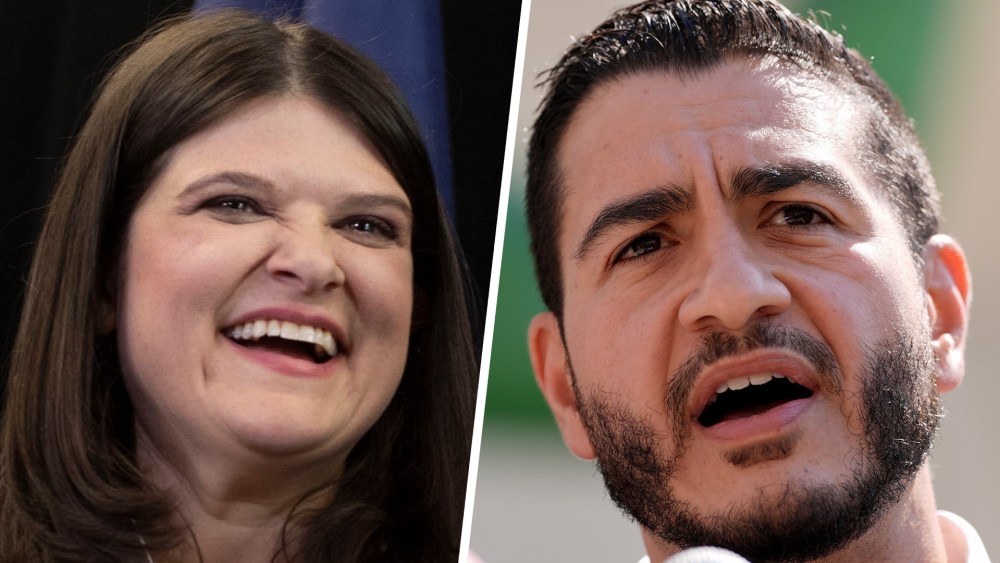
The prevailing wisdom among centrist Democrats is that former Wayne County Health Director Abdul El-Sayed’s victory in the Democratic Senate primary in Michigan on Tuesday spells disaster for the party’s chances of winning the seat — and jeopardizes its odds of clinching a majority in the senate. El-Sayed’s boldly progressive positions, according to this view, will alienate the electorate of a purple state whose statewide outcomes are determined by moderate swing voters.
But a recent study by two political scientists indicates that this view is wrong — and that even in the Rust Belt a left-wing candidate like El-Sayed is not doomed by virtue of supporting Medicare for All and cutting off military aid to Israel. A big reason for that is because of the way President Donald Trump has scrambled our politics and transformed the way Americans think of the left-right political spectrum.
Plunging trust in institutions and the collapse of the neoliberal consensus have made the banner of “anti-establishment” and “populist” positioning more salient than conventional ideology.
A lot of political scientific literature supports the idea that from the late 20th century through the mid-2000s, there were clear rewards for candidates in federal elections to take moderate positions and penalties for taking extreme ones. But there’s evidence indicating that during the 2010s — around the time of Trump’s rise and Sen. Bernie Sanders’ insurgency in the Democratic primaries — that dynamic began to change. Stanford University professor Adam Bonica and University of California professor Jacob Grumbach recently released a working paper — currently under peer review at a journal — that analyzes congressional elections from 2016 to 2024, and it found