by Hayes Brown | Oct 1, 2026 | Congress, elections, Opinion
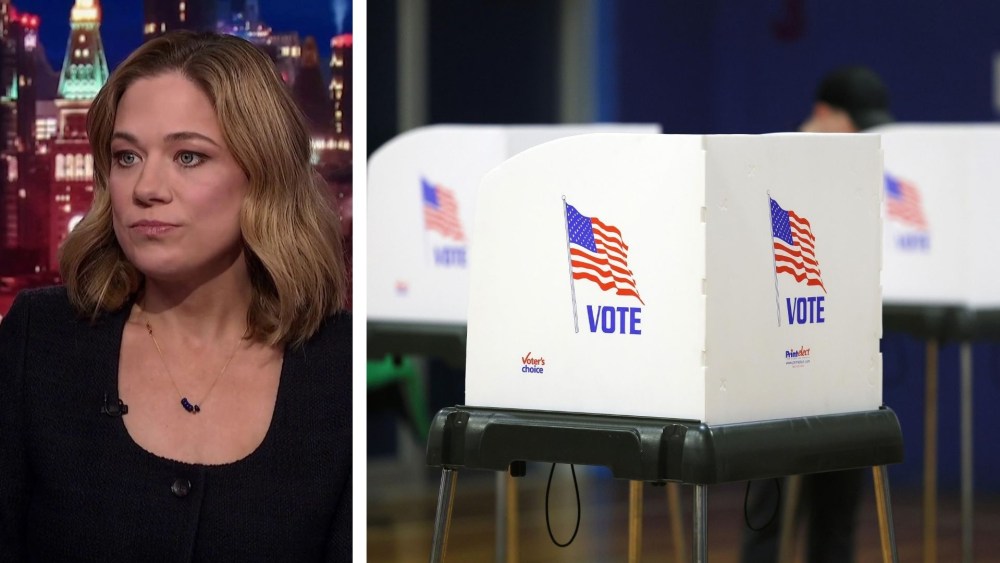
Susan Collins of Maine is locked in one of the toughest campaigns an incumbent Republican senator faces this cycle. Her campaign pitch to her constituents leans, in large part, on her seniority and status atop the Senate Appropriations Committee. Like many of her GOP colleagues, President Donald Trump and his administration’s policies have proved more of a hinderance than help to Collins’ message, and the latest, likely illegal move out of the White House undercuts her appeal even further.
Thursday marks the beginning of a new fiscal year in Washington and the expiration of the previous year’s federal funding. The federal government will shut down unless Congress has passed 12 annual appropriations bills ahead of this turning point. That fate was averted thanks to a short-term funding bill passed in September locking in current spending levels until December. As the lead Republican appropriator in the Senate, Collins was crucial in making sure that the federal government wasn’t shut down during campaign season, while budget negotiators wait to see how the dust settles after the election.
The subtext: get rid of me, potentially lose out on millions of dollars in federal project funding.
The executive branch’s various departments and agencies are required to spend appropriated funds in the ways that Congress’ funding laws instruct them. Office of Management and Budget Director Russell Vought disagrees. For the last two years, he’s refused to follow the legislative branch’s clear directions — appointing himself the final arbiter on which programs are worthy of funding. In the process, Vought has compiled a sizable bag of tricks to dodge the Impound Control Act, a law that prevents the White
by Steve Benen | Sep 30, 2026 | Congress, elections, Maddowblog
When JD Vance appeared on a prominent podcast a couple of weeks ago, the vice president had an opportunity to pitch his message for the midterms. It didn’t go especially well.
Asked what he would tell voters who were disappointed by what had transpired since early last year, the Ohio Republican said: “Give us another chance, or give us another couple of years, to continue to work on the amazing things that we’ve been doing for the past two years.”
The phrasing was widely and swiftly panned — Democratic Sen. Brian Schatz of Hawaii called it “the most mind-boggling midterm pitch I’ve ever heard in my life” — in large part because “give us another chance” was an inherently defensive, and rather pitiful, message.
But the latter part of the vice president’s message stood out too: Vance apparently wants voters to believe total Republican control of the government in 2025 and 2026 has led to “amazing things.”
In other words, with time running out in the midterm cycle, the vice president tried to appeal to those who were simply delighted with the current status quo in the United States — and Vance apparently isn’t the only one.
Mike Johnson on what Republicans will do if they hold the House: “What we would do in the next two years is exactly what we have been doing already”— Aaron Rupar (@atrupar.com) 2026-09-29T12:32:47.855Z
House Speaker Mike Johnson sat down with CNBC’s “Squawk Box” hosts on Tuesday, and the Louisiana Republican sketched out a vision for governance after the midterms.
“What we would do in the next two years is exactly what we have been doing already,” Johnson said.
Congress’ top GOP
by Steve Benen | Sep 30, 2026 | Congress, Maddowblog
After covering Congress for more years than I care to admit, one incident stands out in my memory as the most embarrassing thing I’ve ever seen on Capitol Hill.
On Sept. 29, 2015, then-Rep. Jason Chaffetz summoned then-Planned Parenthood President Cecile Richards to appear before the House Oversight Committee, and the Utah Republican presented a piece of evidence that he apparently thought would be devastating: Chaffetz unveiled a chart, which he insisted he’d found in the organization’s annual report, which appeared to show rising abortion rates and declining breast cancer screening rates.
The chart was itself a bizarre mess (its y-axis, for example, didn’t exist), though it became far worse when Richards explained to the committee chairman that it hadn’t come from Planned Parenthood’s annual report. In fact, it quite literally said, “Source: Americans United for Life,” in all capital letters, on the slide Chaffetz was so excited about.
The GOP congressman, with a deer-in-the-headlights look, quickly realized that he and his staff hadn’t done their homework — indeed, they’d failed to read their own slide — and his “gotcha” moment had backfired. Clearly embarrassed, Chaffetz immediately abandoned his dramatic moment and moved on.
Exactly 11 years to the day later, Republican Sen. Eric Schmitt of Missouri tried to hatch a “gotcha” moment of his own, which backfired in ways that proved to be far worse.
Schmitt beclowns himself Schmitt concocted an elaborate conspiracy theory that Smith traveled to Atl for a Hawks game and to collude with Fani Willis, & flashed his “evidence” before accusing Smith of perjury. There’s just one problem — his facts were totally wrong.Here’s the whole sequence:— Aaron Rupar
by Ja'han Jones | Sep 29, 2026 | Congress, News Analysis, Science, White House
Happy Tuesday! Here’s your Tuesday Tech Drop, some of the past week’s top stories from the intersection of technology and politics.
Raskin rebukes Apple over ICE app
Rep. Jamie Raskin is demanding answers from Apple over the removal of ICEBlock from its App Store — at the Trump administration’s urging. The Maryland Democrat has been looking into Apple’s handling of the app, which allowed users to monitor where Immigration and Customs Enforcement activity was taking place. In a letter dated Monday, Raskin denounced the company’s acceptance of the Justice Department’s rationale that the app posed a threat to federal agents, writing:
In courthouses across the country, federal judges from across the ideological spectrum have raised the alarm about this Administration’s pattern of lying about facts and evidence. Whatever DOJ told Apple about ICEBlock and other similar apps, you would be well advised to interrogate and verify their claims.
Read the letter here.
Moore data center defiance
Democratic Maryland Gov. Wes Moore has signed an executive order establishing a panel that will grade large data center projects according to whether they meet the necessary benchmarks to protect surrounding communities.
Read more at Baltimore’s WMAR-TV.
Trump hosts AI execs
President Donald Trump, whose financial disclosure forms have shown massive investments in artificial intelligence companies, hosted several AI executives at a ritzy state dinner for Chinese leader Xi Jinping — an event that came amid the president’s ongoing push to prevent regulation of the industry.
Read more at The New York Times.
Degree data
The Trump administration has finalized a rule that will allow the use of IRS data to assess whether earnings for graduates with certain college degrees should prevent students from taking out
by Steve Benen | Sep 29, 2026 | Congress, Maddowblog, White House
Today’s edition of quick hits.
* Third-country deportations: “The Supreme Court on Tuesday granted the Trump administration’s bid to enforce its policy on deporting immigrants to countries they aren’t from. In addition to granting emergency relief over dissent from the court’s three Democratic appointees, the justices also said they would take up full review of the issue during the new court term, meaning a full decision on the matter is now expected by July.”
* There’s nothing good about the latest news on the bond market: “Yields on the US Treasury’s longest-dated bond rose for a sixth straight day, crossing another key threshold amid a deepening selloff across global debt markets. The 30-year rate surpassed 5.61% on Tuesday to touch a level last seen in 2002, returning deeper into territory that had long been the norm before the low-rate era spanning the global financial crisis and pandemic.”
* Note, bans like these are even more aggressive than tariffs: “The Trump administration imposed an import ban on some Canadian products, including alcohol, dairy products and motorcycles, at 12:01 a.m. on Tuesday. The move was the latest offensive in a vicious trade fight President Trump has picked with Canada. Though the bans affect just a tiny proportion of Canada’s exports to the United States, they are a sign of how much the relationship between two formerly close political and economic allies has unraveled.”
* A case of ongoing interest: “Three news organizations that had been blocked from accessing the White House by President Donald Trump asked a federal judge to extend an order that temporarily restored their access after they had been barred for almost a
by Steve Benen | Sep 29, 2026 | Congress, elections, Maddowblog, White House
Four weeks ago, as September was just getting underway, Donald Trump hosted a White House event for congressional Republicans, who heard the president share some of his plans for the midterm elections.
Trump said that over the final month of the cycle, he would headline a series of campaign events, with a specific focus on “35 races.” The president didn’t go into a lot of detail about where he was headed, but he made one thing clear to the GOP lawmakers in attendance: If you’re an incumbent who’s all but certain to win, Trump said, “please don’t ask me to come to your area and make a speech.”
Instead, he added, his focus would be on Republican candidates who are “either tied or you’re winning by a little bit, or you’re losing by a little bit.”
Four weeks later, with 35 days remaining before Election Day, Trump’s upcoming travel schedule is coming into focus — and it’s remarkable how defensive his itinerary is. Politico reported:
President Donald Trump intends to spend the next 30 days campaigning for Republicans, many of whom are underwater in states the president easily carried two years ago. […]
Trump’s upcoming travel — including to Alabama, Oklahoma and Ohio this week — puts a focus on what Republican donors and operatives have feared for months: that even a gerrymandered House map and whopping cash advantage won’t be enough to save the House or Senate from Democrats.
For those keeping score, just two years ago, Trump carried Alabama by 31 points, Oklahoma by 34 points and Ohio by 11 points. The president is also reportedly soon headed to Alaska, which he won by