by Ryan Teague Beckwith | May 24, 2026 | Opinion, White House
Solar power is the cheapest form of electricity to set up in most parts of the world. Tariffs are paid by U.S. importers, who pass along the costs to consumers. And noncitizen voting is extraordinarily rare.
These three statements are facts. You can verify them by looking at scientific research, listening to experts or just reading reliable news outlets.
Recent polls, however, show that substantial numbers of Republican voters simply don’t believe these statements. That’s bad for the country, because it’s harder for us to solve problems and decide how to move ahead when we can’t agree on the facts. It’s also bad for Republican politicians — and they have only themselves to blame.
Led by President Donald Trump, many members of the GOP in recent years have made their case by attacking the underlying facts, making baseless claims and undermining the credibility of independent experts who could contradict them. The result is a party that is increasingly out of touch with voters outside its ideological bubble and unable to come up with good arguments or practical solutions.
Just look at the numbers:
In a January poll by Morning Consult, 51% of Republicans said tariffs are a “fee foreigners pay for selling products to the United States,” while 38% more accurately said they are “a tax on foreign products that Americans buy.”
In a March poll by the Pew Research Center, 43% of Republicans said that solar power is more expensive to consumers than most other energy sources, while only 24% said that it’s cheaper.
In an April poll by Ipsos, 82% of Republicans said that large numbers of noncitizens cast fraudulent ballots in U.S. elections, compared

by Duncan Levin | May 24, 2026 | Opinion
Acting Attorney General Todd Blanche went before Congress for a budget hearing. His testimony became a portrait of institutional collapse.
Blanche’s appearance on Tuesday touched off a political storm over the nearly $1.8 billion fund that could benefit President Donald Trump’s political allies — a controversy serious enough that Blanche returned to the Hill on Thursday to privately brief Republican senators. Even as the political battle rages, however, the fight over the fund should not obscure the larger issue Blanche’s testimony exposed: what the Department of Justice now appears to stand for.
Play
GOP senators scrap vote on Trump budget bill after meeting with Todd Blanche
May 21, 2026 / 02:09
Blanche did little to quell concerns that the Justice Department is no longer an independent law enforcement agency charged with serving the public interest but, increasingly, a legal apparatus organized around Trump’s grievances, allies and personal history.
The most revealing issue — the one that has been roiling Washington this week — was the nearly $1.8 billion “Anti-Weaponization Fund,” created as part of a settlement related to Trump’s lawsuit over leaked tax records. The fund is supposed to compensate people who say they were politically targeted by prior Justice Departments. But under questioning from lawmakers, Blanche declined to rule out payments to people who had been convicted of assaulting police officers at the U.S. Capitol on Jan. 6, 2021. He also declined to say that Trump campaign donors would be excluded from accessing the fund, which will be administered by a five-member commission appointed by Blanche.
It was enough to make Republican Sen. Mitch McConnell, the former longtime majority leader, declare: “So the nation’s top law
by Robert W. Cross | May 24, 2026 | Opinion
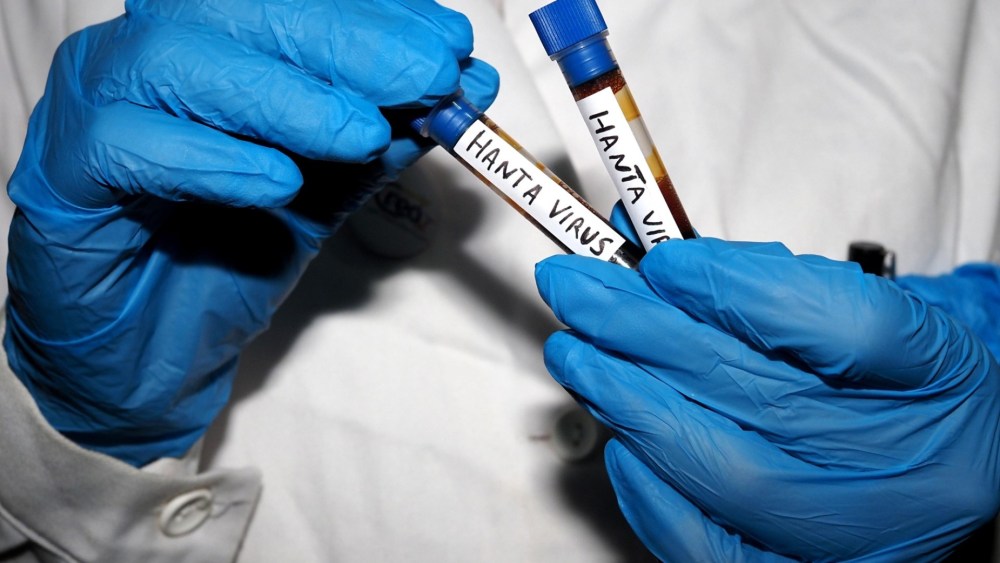
I am a virologist. I have spent much of my career studying high-consequence microbes such as the Ebola virus, Lassa fever virus and hantaviruses, including the Andes species confirmed in the recent outbreak. My goal has always been to understand how such viruses make us sick and to use that information to develop treatments or, ideally, to prevent infections altogether.
In this type of work, governmental support for research is critical. The potential threat of outbreaks is clear in recent headlines about the Ebola virus outbreak in the Democratic Republic of Congo and Uganda, and, closer to home, one of the American cruise ship passengers potentially exposed to the hantavirus outbreak being ordered to remain in quarantine facilities in Nebraska.
Although much remains to be learned about hantaviruses, there are some things we know.
In 2020, a group of colleagues and I studying hantaviruses were approved for five years of funding through the National Institutes of Health/National Institute of Allergy and Infectious Diseases’ Centers for Research in Emerging Infectious Diseases program. We closely collaborated with Argentine scientists on a newly emerged hantavirus closely related to the Andes virus found in rodents that had already caused disease in humans. Unfortunately, as priorities shifted at NIH, the program was not renewed last year.
Although much remains to be learned about hantaviruses, there are some things we know:
Play
Hantavirus outbreak from cruise ship hits 11 cases, 18 Americans in quarantine
May 14, 2026 / 04:51
Typically, hantavirus infections are the result of direct or airborne contact with rodents or their excrement; the outbreak traced to the MV Hondius cruise ship is associated with one of the more severe species, the
by Marc Santia | May 24, 2026 | News
Secret Service officers shot a man after he opened fire on them at a security checkpoint outside the White House, two sources briefed on the incident told MS NOW. The gunman was hit and critically injured, the sources said.
A bystander was shot in the crossfire, the two sources told MS NOW. It’s unclear who shot them. The bystander was taken to a hospital, and their condition is unknown, the sources said. None of the Secret Service officers was injured.
Journalists working at the White House on Saturday reported hearing a series of gunshots and were told to seek shelter inside the press briefing room. U.S. Secret Service officers kept them from leaving.
On X, the Secret Service said it was “aware of reports of shots fired near 17th Street and Pennsylvania Avenue NW” — one block from the White House — and was “working to corroborate the information with personnel on the ground.”
In a social media post, FBI Director Kash Patel said officers were responding to shots fired and said he would “update the public as we’re able.”
President Donald Trump was inside the White House at the time.
The Metropolitan Police Department did not immediately respond to requests for information.
The gunfire Saturday comes nearly a month after what law enforcement authorities said was an attempted assassination of the president on April 25 as he attended the annual White House Correspondents’ Association Dinner at a Washington hotel. Cole Tomas Allen, of Torrance, California, recently pleaded not guilty to charges that he attempted to kill Trump and remains in federal custody.
Following that scare, Secret Service officers shot a suspect they said had fired at officers near the Washington
by Jake Traylor | May 23, 2026 | News
President Donald Trump spent Saturday consumed with what to do about the war he started with Iran.
He met with top U.S. officials at the White House Saturday and held a call with Gulf leaders about the state of the war, according to a White House official granted anonymity to discuss sensitive details.
Top U.S. officials involved in the talks included Vice President JD Vance, Secretary of Defense Pete Hegseth, Special Envoy Steve Witkoff, Jared Kushner, the president’s son-in-law, and Chairman of the Joint Chiefs of Staff Dan Caine, according to the official.
Specifics of options on the table were unclear. But the high-level discussions came as Trump and his team were reportedly weighing a new offer from Iran for ending hostilities as the president’s popularity and standing with fellow Republicans slipped. The president told Axios that he’s “50-50” on whether to reach a deal with Iran or resume military strikes that were paused on April 8.
Sen. Lindsey Graham, R-S.C., a key Trump congressional ally, warned against agreeing to a deal that could wind up giving Iran the appearance of dominance.
“If a deal is struck to end the Iranian conflict because it is believed that the Strait of Hormuz cannot be protected from Iranian terrorism and Iran still possesses the capability to destroy major Gulf oil infrastructure, then Iran will be perceived as being a dominate force requiring a diplomatic solution,” Graham said in a social media post Saturday.
“It makes one wonder why the war started to begin with if these perceptions are accurate,” Graham said, adding, “It is important we get this right.”
Trump reportedly told Axios earlier Saturday, “Either we reach a good