by Communications Staff | Jul 23, 2026 | News
Tyrants fear free speech. In North Korea, something as simple as watching a foreign film, listening to K-pop, or sharing a flash drive loaded with news from the outside world can lead to years of hard labor in a prison camp. They fear it for a simple reason: truth breaks monopolies of power. Once people can hear something other than the state’s version of reality, fear begins to loosen its…
Source
by Thomas Kennedy | Jul 23, 2026 | 287(g) program, AI, AI surveillance, CBP, Customs and Border Protection, data centers, Department of Homeland Security, DHS, Flock Safety, Florida, ICE, license plate readers, Op-Ed, Palantir, Policing, Resistance, Ron DeSantis, Surveillance, Trump Administration
Sam Altman, the embattled CEO of the AI technology company OpenAI, vacillates between warning of a labor market doom loop due to the technology his company developed and promising a new golden era for humanity just around the corner. In an essay posted to his X account this July, he claimed that “by safely stewarding AGI [artificial general intelligence] into the world, we can enter a new…
Source
by David Rohde | Jul 23, 2026 | News
President Donald Trump’s effort to undermine trust in the midterm elections by claiming that China had a role in his losing the presidency in 2020 has put one of his most trusted aides in an awkward position.
John Ratcliffe, Trump’s current CIA director, was serving as director of national intelligence from May 2020 to January 2021 and oversaw the delivery of the President’s Daily Brief and other intelligence to Trump.
That’s the time period when Trump says he was the victim of the farfetched and unproven plot by U.S. spy agencies that he described in his primetime speech last week.
Pointing to declassified documents he ordered released online, Trump said U.S intelligence agencies began learning in 2020 that tens of millions of Americans’ voting data had been “bought, stolen or hacked by China.” But he said they kept it secret from Trump.
Ratcliffe’s role in the release of the documents and his second-term role as CIA director have come under increased scrutiny.
Critics say Ratcliffe should stand up to Trump and threaten to resign — or actually resign — as Cabinet members did in his first term, including Gen. Jim Mattis, the defense secretary; Attorney General Bill Barr; and CIA Director Gina Haspel.
Julia Curlee, a former CIA analyst who recently resigned after 20 years of service, described a “conspiracy of silence” in Washington and said Ratcliffe and others are enabling Trump to take increasingly authoritarian steps that should be prompting mass resignations.
She also said the release of CIA documents to bolster Trump’s political messaging violated sweeping reforms enacted to prevent the CIA from meddling in American politics as it did during the Cold War.
“To me,
by Amy Goodman | Jul 23, 2026 | Columbia University, First Amendment, Freedom of Speech, Habeas, ICE, immigration jails, Interview, Mohsen Mahdawi, Palestine
Palestinian activist Mohsen Mahdawi, whose arrest by masked and hooded ICE agents when he arrived for his naturalization interview to become a U.S. citizen made national headlines last year, is facing a new deportation threat after a three-judge panel overturned a lower court ruling that had freed him from ICE custody. Mahdawi was involved in pro-Palestine protests at Columbia University…
Source

by Ryan Teague Beckwith | Jul 23, 2026 | elections, Opinion
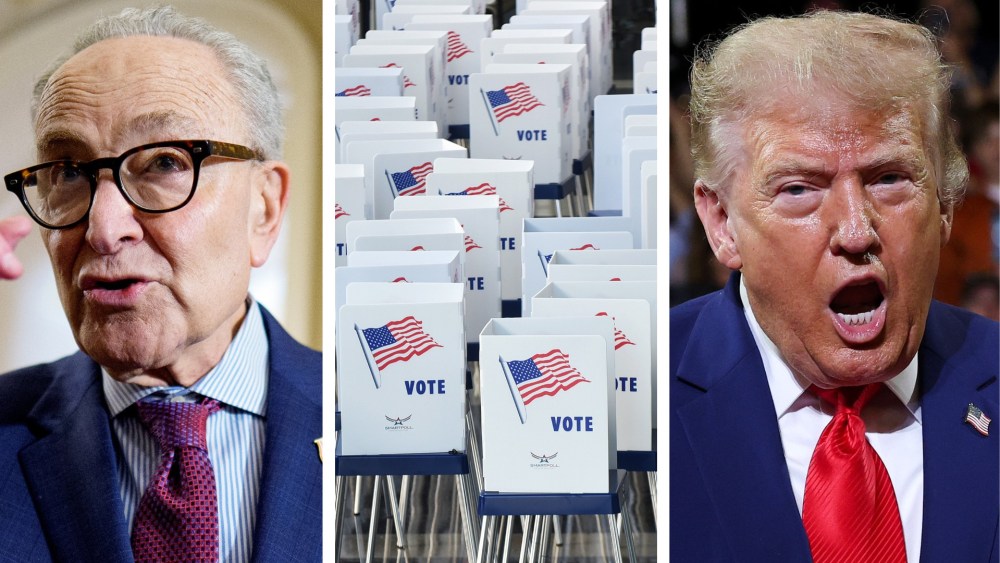
Since losing the 2020 election, President Donald Trump has put forward a lot of ideas to change how America votes.
Some, like hand-counting all ballots, are nonstarters. Others, like restricting mail voting, have proven a tough sell in states where it’s popular, including Republican-leaning ones. And a handful have become mainstream Republican positions, including imposing stricter voter ID and requiring proof of citizenship to register to vote.
Democrats have generally opposed those proposals, arguing that they would do more to make voting harder than to prevent the relatively rare cases of election fraud.
But one Trump proposal deserves a second look: speeding up election results.
Elections results often come in slowly because officials are verifying signatures on mail-in ballots, allowing more time for mail ballots sent by Election Day to arrive and giving voters whose ballots were initially rejected opportunities to fix the issue and have them counted. Those are important safeguards for both access and accuracy. But there are other ways to get faster results that don’t have those trade-offs.
Dismissing the goal of faster results carries its own risks. Polls show overwhelming support for faster election night results among both Democrats and Republicans. Research indicates that unexpectedly slow vote counts can undermine trust in the results. And there are ways to speed up results considerably without making it harder for people to cast their ballots and get them counted.
Trump demonstrated why faster counting matters.
Ironically, Trump himself demonstrated why faster counting matters.
Just hours after polls closed in 2020, he began casting doubt on incomplete returns, pointing to the normal shifts that occur as large batches of ballots are reported from different jurisdictions as supposed