by Ebony Davis | Aug 6, 2026 | News
A Republican-led Senate committee voted Thursday to advance a resolution to hold former White House chief medical adviser Dr. Anthony Fauci in contempt of Congress after he repeatedly invoked his Fifth Amendment right against self-incrimination during a contentious hearing last week.
The Senate Homeland Security and Governmental Affairs Committee approved the measure by a party-line vote after Chairman Sen. Rand Paul, R-Ky., argued Fauci unlawfully refused to answer lawmakers’ questions despite appearing under subpoena on July 29.
Paul can refer Fauci to the Justice Department for prosecution or request a full Senate vote on the measure.
Paul has argued that a pardon issued by former President Joe Biden covering Fauci’s federal conduct through early 2025 stripped him of the ability to invoke the Fifth Amendment.
The vote marks the latest chapter in a rivalry that has spanned the Covid-19 pandemic. Paul has repeatedly accused Fauci of misleading Congress about U.S.-funded virology research and the origins of the coronavirus, allegations Fauci has consistently denied. Their televised exchanges over pandemic restrictions, masks and gain-of-function research became some of the most heated exchanges of congressional oversight during the public health emergency.
Last week’s hearing quickly deteriorated after Fauci announced in his opening statement that he would invoke the Fifth Amendment and decline to answer questions. Fauci said Paul’s repeated calls for his prosecution, along with other actions targeting him, convinced him the hearing was intended to build a criminal case rather than gather facts.
During the hearing, Paul and some lawmakers sought to question Fauci about his handwritten pandemic diary entries, federal research funding and the government’s pandemic response. He ultimately refused to answer more than 100 questions from lawmakers.
Paul responded

by Zeeshan Aleem | Aug 6, 2026 | Congress, elections, Opinion
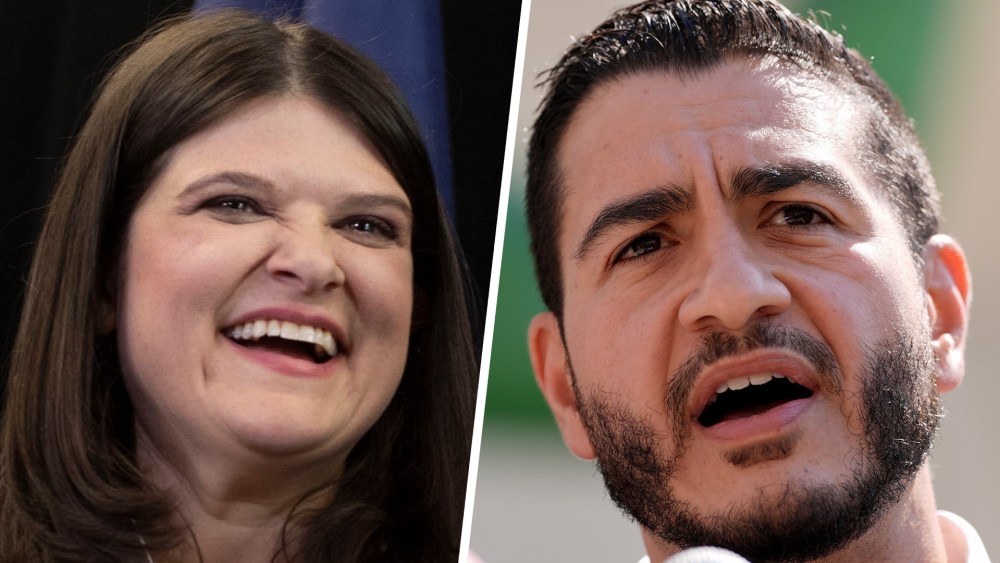
The prevailing wisdom among centrist Democrats is that former Wayne County Health Director Abdul El-Sayed’s victory in the Democratic Senate primary in Michigan on Tuesday spells disaster for the party’s chances of winning the seat — and jeopardizes its odds of clinching a majority in the senate. El-Sayed’s boldly progressive positions, according to this view, will alienate the electorate of a purple state whose statewide outcomes are determined by moderate swing voters.
But a recent study by two political scientists indicates that this view is wrong — and that even in the Rust Belt a left-wing candidate like El-Sayed is not doomed by virtue of supporting Medicare for All and cutting off military aid to Israel. A big reason for that is because of the way President Donald Trump has scrambled our politics and transformed the way Americans think of the left-right political spectrum.
Plunging trust in institutions and the collapse of the neoliberal consensus have made the banner of “anti-establishment” and “populist” positioning more salient than conventional ideology.
A lot of political scientific literature supports the idea that from the late 20th century through the mid-2000s, there were clear rewards for candidates in federal elections to take moderate positions and penalties for taking extreme ones. But there’s evidence indicating that during the 2010s — around the time of Trump’s rise and Sen. Bernie Sanders’ insurgency in the Democratic primaries — that dynamic began to change. Stanford University professor Adam Bonica and University of California professor Jacob Grumbach recently released a working paper — currently under peer review at a journal — that analyzes congressional elections from 2016 to 2024, and it found
by Jarvis DeBerry | Aug 6, 2026 | Opinion, Politics, White House
We shouldn’t know who David Hearn is. The 67-year-old placed ninth in a white water canoe race at the 1996 Olympics — a distant finish in the near-distant past that underscores the point that, in 2026, he should be blissfully anonymous.
But in a move that violated the legitimate expectation that our government will not wrongly scapegoat its people, the Trump administration slimed Hearn’s name. In June, the Justice Department made the outrageous claim that Hearn had vandalized the Lincoln Memorial Reflecting Pool in Washington and charged him with a felony count of destruction of property, which brings a maximum sentence of 10 years in prison.
Rather than admit to a botched renovation, Trump’s despotic administration charged Hearn, and three others, with crimes.
Hearn was one of several people who reportedly reached into the 104-year-old Reflecting Pool and touched pieces of the recently installed liner they said had peeled off, and rather than admitting to a botched renovation, Trump’s despotic administration charged Hearn, and three others, with crimes. After leaving them in this legal peril for more than a month, U.S. Attorney Jeanine Pirro said Friday that her office was dropping the case against Hearn and the others after documents from the Interior Department made clear that they didn’t vandalize the pool, but rather that a contractor on the project did poor work.
This is not a “no harm, no foul” situation — because unwarranted attention from the federal government is harm in and of itself. Yes, Pirro throwing out the cases is better than her continuing to pursue them, but dismissals and acquittals will never be as significant as not having been wrongly prosecuted
by Steve Benen | Aug 6, 2026 | Maddowblog, News, Politics
During Kevin Hassett’s latest appearance on Fox Business, the director of the National Economic Council pushed a very specific message: Data centers are awesome.
“Data centers are very good for towns because they create so many jobs, bring people in with high incomes that can buy houses and stuff like that,” Donald Trump’s top economist said late last week. He added that placing a data center in a “sleepy town” will lead to “a whole bunch of happy residents.”
It was a curious pitch. Whatever one thinks of data centers, the idea that they bring in a bunch of high-income workers is bizarre: Data centers are filled with computer servers and cooling machines, not well-paid executives — and servers are not known for buying “houses and stuff like that.”
Hassett’s rhetoric, however, was clearly an extension of the White House’s official line.
In fact, a week earlier, the president pushed a similar line on data centers. “You have to convince your community how great these things [are],” Trump said. “You can’t fight it; you have to go with it.”
The Republican president echoed the line this week during his latest Fox News interview.
Trump: “I think any community that turns down AI is making a big mistake … data centers, if you look at the state, everything is good around them”— Aaron Rupar (@atrupar.com) 2026-08-05T03:47:46.020Z
“Data centers, if you look at the stats, everything’s good around [them],” he said.
The Associated Press reported a couple of weeks ago that Democrats are seizing on the backlash to data centers, even in rural areas where the party tends to fare poorly, which makes it all the more surprising to see
by Allison Detzel | Aug 6, 2026 | News
Fresh off his victory in Kansas’ Democratic Senate primary, the Rev. Adam Hamilton, who leads the country’s largest United Methodist congregation, told MS Now’s Stephanie Ruhle that he’s ready to end his party’s nearly century-long losing streak for Congress’ upper chamber by defeating Sen. Roger Marshall, the Republican incumbent.
“It’s very important to me to be able to displace — to help Roger Marshall retire,” he said Wednesday morning, adding, “He spends a lot of time in Florida when he’s not in Washington, D.C. I’d love to help him just spend more time in Florida.”
According to Cook Political Report, the pastor’s win on Tuesday helped make his race potentially more competitive ahead of November, with analysts shifting the race from solid Republican to likely Republican.
In deep-red Kansas, Hamilton has made his faith a central part of his campaign, telling MS NOW he wants to prove that Christianity doesn’t belong to one political party.
“The religious right does not represent all Christians,” he said, adding: “There are many people who are saying what we see in Washington does not reflect their faith; 66% of Americans claim to be Christians — there’s a lot of those who say this doesn’t look like anything like the Christian faith.”
“I had a man in Holton, Kansas — so this is a rural area in Kansas —and he said to me on a campaign event, ‘I’m a one-issue voter,’” Hamilton recalled. “And I was waiting to hear what his one issue would be. And he said, ‘Here’s the thing: I will not vote for anybody who doesn’t believe we should love our neighbor as we love ourselves.’ And