by Adam Hudacek | Sep 29, 2026 | elections, News
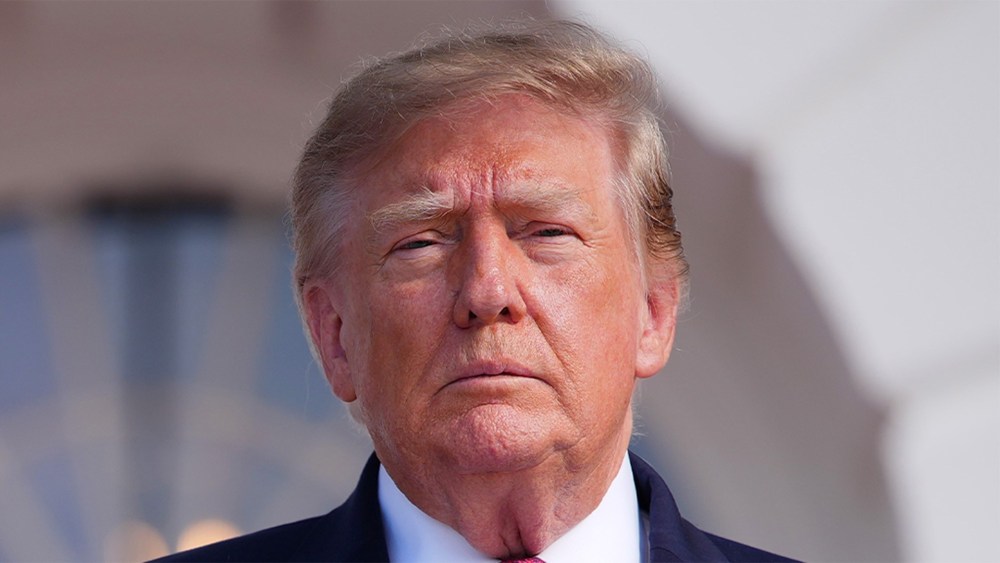
Abdul El-Sayed on Tuesday unveiled a plan to help Michigan’s struggling small farms, making him the latest Democratic Senate hopeful to court farmers as rising costs weaken Republicans’ grip on rural America.
Farmers are under serious financial strain. Diesel prices, pushed up by the war in Iran, hit a record national average of about $6.52 a gallon last week, according to AAA. Fertilizer prices spiked this spring, just as farmers were buying for planting season, as the war bottlenecked the global supply. But even before the war, many farms were on precarious financial footing: Farm bankruptcies surged nearly 46% in 2025 according to the American Farm Bureau Federation, with the heaviest concentration of filings in the Midwest and South, including Georgia, Iowa, Michigan and Minnesota.
With the midterms weeks away, Democrats in several Senate races see an opening in farm country, where their party has long struggled. Trump won 69% of rural voters in 2024, according to data from the Pew Research Center. But a recent KFF/Associated Press survey showed that 57% of rural voters — including 27% of rural Republicans — disapprove of Trump’s handling of the economy.
El-Sayed, who faces Republican former Rep. Mike Rogers, rolled out the plan as part of a broader platform that also covers food and water safety. The campaign pieced it together with input from family farmers and members of the Michigan Farmers Union, a source familiar with the campaign told MS NOW, speaking on condition of anonymity to discuss internal conversations.
“Family farmers are feeling the pinch from Trump’s price hikes as much as anyone, and they are a key part of the coalition that will

by Hayes Brown | Sep 29, 2026 | Opinion, White House
The White House would deeply appreciate it if people would stop referring to the government-sponsored ads that recently began airing around the country as “propaganda.” Yes, the three ads heavily feature some combination of President Donald Trump and his supposed accomplishments, snippets of speeches and praise for his vision, and little to no new information. But the White House argued in a press release issued Friday that these are all merely “public service announcements” serving as “a reminder for Americans to love their country and know why it’s worth defending — at home, at the border, and abroad.”
State-sponsored media, with the goal of tying patriotism to the current leader and promoting him as necessary to the country’s success, sure does sound like propaganda.
State-sponsored media, with the goal of tying patriotism to the current leader and promoting him as necessary to the country’s success, sure does sound like propaganda.
If it is, the ads clearly violate a provision added to every government spending bill since the 1950s: “No part of any appropriation … shall be used for publicity or propaganda purposes within the United States not heretofore authorized by the Congress.” This prohibition does not apply to legitimate information-sharing and educational materials, which the White House claims these ads are.
The Government Accountability Office has previously said there are three ways that government-produced media can escape the propaganda accusations. Whether in video, print or online, these materials cannot be “self-aggrandizing,” purely partisan in nature or covert propaganda that misleads the public about its source. The White House argues that the ads clear that bar, because they (however imprecisely) are U.S. government-funded, while “President
by Syedah Asghar | Sep 29, 2026 | News
After the Department of Justice said it planned to deploy 1,000 federal election observers ahead of the midterms, top Democrats are now demanding answers about where the monitors will go, what they will do, and how they’re being trained.
In a letter shared first with MS NOW, Reps. Jamie Raskin, D-Md., and Joe Morelle, D-N.Y. — the top two Democrats on the Judiciary and Administration committees, respectively — asked Attorney General Todd Blanche and Assistant Attorney General for Civil Rights Harmeet Dhillon to provide internal documents about the deployments. The Democrats also want all communications about the monitors and any correspondence about their deployments.
“The DOJ must demonstrate that it is not misusing its election monitoring program in any way and that its monitors are being used for appropriate purposes,” the lawmakers write.
Play
‘Resist’: Former assistant AG urges election officials to oppose poll monitors sent to ‘cause mischief’
August 18, 2026 / 08:25
The lawmakers cited concerns from Wyoming Republican Governor Mark Gordon, who said monitors from the DOJ behaved “a bit aggressive” and “irregular,” during the state’s primary election. During a state canvassing board meeting, Gordon said he asked state Attorney General Keith Kautz to investigate the nature of the monitors’ visits.
The episode has given Democrats an opening to press the administration for details about election-monitoring operations that are expected to be significantly expanded this year.
“In light of this startling report, and in order to ensure that DOJ’s election monitoring program is being used appropriately in advance of the November 2026 midterm election, we request a briefing, any relevant memoranda and training materials, and information detailing where you intend to deploy election monitors and
by Reynold Verret | Sep 29, 2026 | education, Opinion, Politics
This week’s deadline for some student borrowers to exit a government loan program before their bills could double or triple is likely reigniting concerns about whether a college education brings a sufficient return on investment. This conversation is not new, but the Trump administration raised the significance when the U.S. Department of Education announced new rules this summer that tie a university’s access to student loans to how much that school’s graduates earn.
Even without that announcement, American families are increasingly questioning the value of a college education as an investment, and higher education institutions must address that concern with seriousness and transparency. Families deserve assurance from those of us who lead colleges and universities that what we provide will make their students’ lives better. Those students and their families invest years of their lives and substantial financial resources in higher education, and they have every reason to expect higher education institutions to demonstrate that their investment produces meaningful results.
If we make the salary a graduate earns the principal measure of the value of a college education, then we risk replacing all the benefits of that education with what is easiest to count.
Xavier University of Louisiana, where I serve as president, is one of the Top Four producers of pharmacists in the United States, and our school is also a leading producer of Black graduates who earn medical degrees.
However, if we make the salary a graduate earns the principal measure of the value of a college education, then we risk replacing all the benefits of that education with what is easiest to count.
A paycheck is indeed a good measure of the
by Noor Noman | Sep 29, 2026 | Opinion
Last Ditch, a lesbian bar in Western Massachusetts, wrongly became the center of a global media firestorm when it proposed changing its Covid masking policy from required to optional on Saturdays. The Instagram announcement of its decision ignited an intense backlash from many patrons and self-reported disability activists, one of whom commented, “I hope your venue gets firebombed for robbing my fellow immunocompromised people of their Saturday plans just to scrape extra revenue from ablists [sic].”
A Sept. 22 Boston Globe article about the furor quickly went viral and spawned headlines around the world and even led to Hollywood inquiries for possible documentary and scripted adaptations. By Saturday, journalists from all across the country were waiting outside the bar in the sleepy town of Greenfield. (Naturally, this debacle was delicious fodder for the internet and gave birth to a plethora of viral memes and tweets, too.)
I hope your venue gets firebombed for robbing my fellow immunocompromised people of their Saturday plans just to scrape extra revenue from ablists [sic].”A COMMENT LEFT ON LAST DITCH’S INSTAGRAM ANNOUNCEMENT
The Instagram comment above wasn’t the only one that was over the top. As reported by the Globe, one person wrote that people like those who manage the bar “kill disabled people in the name of your own leisure and convenience.” Another argued, “Just say you’re being complicit in a mass disabling event and get it over with.”
As an immunocompromised queer person — who happens to live in Massachusetts — I know we have a long way to go when it comes to disability justice and our collective commitment to protecting immunocompromised and other disabled communities.