by Hayes Brown | Oct 1, 2026 | Congress, elections, Opinion
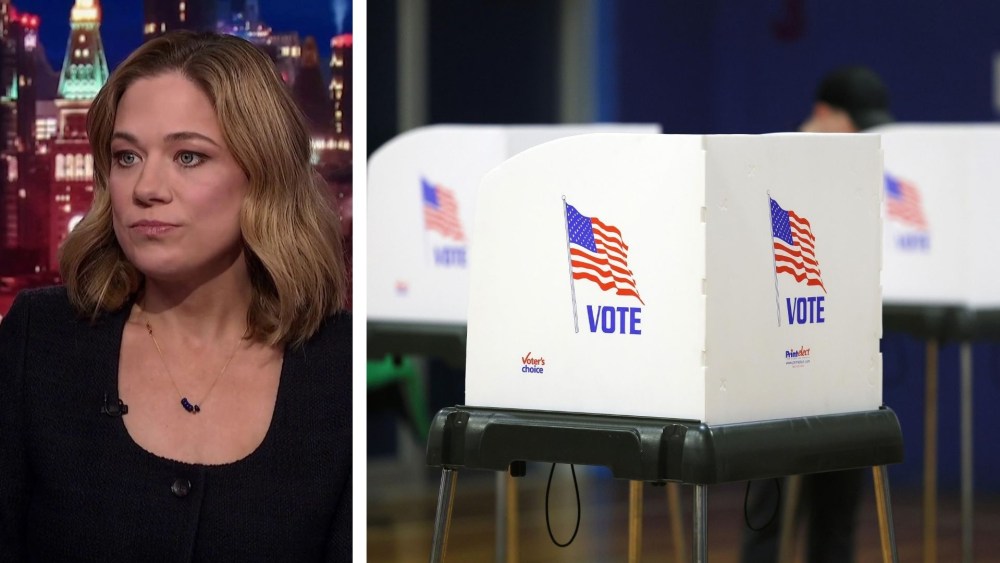
Susan Collins of Maine is locked in one of the toughest campaigns an incumbent Republican senator faces this cycle. Her campaign pitch to her constituents leans, in large part, on her seniority and status atop the Senate Appropriations Committee. Like many of her GOP colleagues, President Donald Trump and his administration’s policies have proved more of a hinderance than help to Collins’ message, and the latest, likely illegal move out of the White House undercuts her appeal even further.
Thursday marks the beginning of a new fiscal year in Washington and the expiration of the previous year’s federal funding. The federal government will shut down unless Congress has passed 12 annual appropriations bills ahead of this turning point. That fate was averted thanks to a short-term funding bill passed in September locking in current spending levels until December. As the lead Republican appropriator in the Senate, Collins was crucial in making sure that the federal government wasn’t shut down during campaign season, while budget negotiators wait to see how the dust settles after the election.
The subtext: get rid of me, potentially lose out on millions of dollars in federal project funding.
The executive branch’s various departments and agencies are required to spend appropriated funds in the ways that Congress’ funding laws instruct them. Office of Management and Budget Director Russell Vought disagrees. For the last two years, he’s refused to follow the legislative branch’s clear directions — appointing himself the final arbiter on which programs are worthy of funding. In the process, Vought has compiled a sizable bag of tricks to dodge the Impound Control Act, a law that prevents the White
by Jake Traylor | Oct 1, 2026 | elections, News, White House
President Donald Trump has promised to campaign in the 35 most competitive races before Election Day. But his midterm blitz opens this week in friendly territory — Texas, Oklahoma and Alabama — and that may be by design.
Trump visiting a swing district would “be a net negative for the candidate there,” said a White House official, granted anonymity to discuss political strategy candidly. “The closer the race, the more the [Republican candidate] is trying to break from President Trump.”
Others inside and around the White House describe the same logic: keep Trump away from contested races, where moderate voters who are unenthusiastic about him cast the decisive ballots.
Friendly territory also suits Trump himself. “The rallies are like a sacred thing for President Trump, and they always have been,” the White House official said. “He would rather spend his last election cycle having big MAGA rallies — and you get those in Oklahoma and Texas and in Alabama and Florida.”
The tour begins Thursday at a truck factory in Denton, Texas. Next comes a rally in Durant, Oklahoma, where Republican gubernatorial hopeful Mike Mazzei is expected to win comfortably, and a stop in Mobile, Alabama, in a Democratic-held House district newly redrawn to lean Republican.
It follows a relatively light September on the campaign trail. Trump held the GOP’s first-ever midterm convention in Texas and a rally in North Carolina, but otherwise spent much of the month on international relations. He traveled to Ireland, met world leaders at the U.N. General Assembly and hosted Chinese President Xi Jinping at the White House.
That’s a slower start than the last time Trump faced a midterm election
by The Associated Press | Oct 1, 2026 | News
CHICAGO (AP) — The U.S. can deport the leader of Wisconsin’s largest mosque — an outspoken advocate of Palestinian rights — on the grounds that he is a threat to national security, an immigration judge ruled Wednesday.
Salah Sarsour was detained in Milwaukee in March by U.S. Immigration and Customs Enforcement officers. A federal judge ordered Sarsour’s release in June, saying he raised a “substantial” claim that the Trump administration was targeting him for speaking out against Israel and advocating for Palestinian rights.
Sarsour called the ruling “deeply disappointing,” but said he intends to appeal.
“I will continue fighting to defend the right to free speech and to stay in the country I have called home for more than three decades,” Sarsour said in a statement.
Government attorneys say Sarsour’s decades-old convictions in Israel make him a threat to national security and accuse him of lying on his green card application and falsely claiming citizenship to vote. Judge Jayme Salinardi, with the Chicago Immigration Court, found him removable on foreign policy grounds but tossed out the government’s claim that Sarsour lied to immigration authorities.
“All illegal aliens receive due process,” the Department of Homeland Security said in a statement. “If a judge finds an illegal alien has no right to be in this country, we are going to remove them. Period.”
Sarsour says his life will be at risk if he is deported to the West Bank
Sarsour, who was born in the Israeli-occupied West Bank, was imprisoned in Israel in 1988 after being convicted of throwing stones at Israeli military personnel. DHS has said he was also convicted of throwing a Molotov cocktail. His defense team
by Sydney Carruth | Oct 1, 2026 | News
New York Attorney General Letitia James’ office is reviewing Cornell University’s initial response to allegations by a former student that she was drugged and gang raped for hours inside a fraternity house in the fall of 2024.
A lawsuit filed by the former student in New York State Supreme Court earlier this month detailed the events the woman, identified as Jane Doe, alleged took place inside Cornell’s Chi Phi fraternity house on the evening of Oct. 19, 2024. The filing has stirred nationwide outrage and fresh scrutiny over how the university and local prosecutors initially handled Jane Doe’s allegations, which were first reported to campus authorities on Nov. 8, 2024.
Matthew Van Houten, the district attorney for Tompkins County, where Cornell is located, said in a statement Monday that his office is reopening its investigation and considering whether to bring criminal charges related to the alleged incident. A spokesperson for the New York Attorney General’s office, who spoke on the condition of anonymity to discuss a sensitive case, said the office is reviewing Cornell’s initial response to the case but has not launched a formal investigation into the university at this time.
Jane Doe is suing more than a dozen defendants, including the seven current and former Cornell students who she alleges sexually assaulted her while she was unable to consent; the Chi Phi fraternity and former president of Cornell’s chapter; her former sorority; and a local bar. The lawsuit is seeking damages from the defendants over allegations of negligence, sexual assault and battery, severe emotional and psychological distress and violations of New York’s Human Rights Law.
None of the seven Chi Phi fraternity
by The Associated Press | Oct 1, 2026 | News
Tennessee officials were unable to complete the execution of Christa Gail Pike on Wednesday night after her lethal injection was delayed for hours as courts considered a last-minute appeal. Pike, sentenced to death for a 1995 murder, would have been the first woman executed in Tennessee in at least 200 years.
Earlier Wednesday night, reporters were ushered into the chamber to witness Pike’s scheduled execution after a divided U.S. Supreme Court overturned an appeals court ruling that had halted the lethal injection one hour before it was originally set to take place.
As the execution began, officials appeared to give Pike two doses of pentobarbital.
At 7:46 p.m. prison officials closed the curtain to the media room. They raised the curtain three minutes later. Pike could be heard loudly snoring, and the curtain was closed again at 8:06 p.m.
Pike continued to be heard snoring behind the closed curtain until the microphone was cut off at about 8:53 p.m. Pike’s spiritual advisers were also seen being ushered in and out of the room, according to reporters. Around that time, officials announced that media witnesses would be escorted from the area.
The Tennessee Attorney General’s Office did not immediately respond to MS NOW’s request for comment.
As reporters who witnessed the execution gave their accounts of the execution at a press conference, one common observation emerged: Pike appeared to be “very clearly alive” when they were escorted from the chamber.
Tennessee Department of Correction spokesperson Dorinda Carter told media witnesses she was unable to immediately provide information about what happened.
During the news conference, an ambulance was seen leaving the facility.
“I cannot emphasize enough how much of whatever